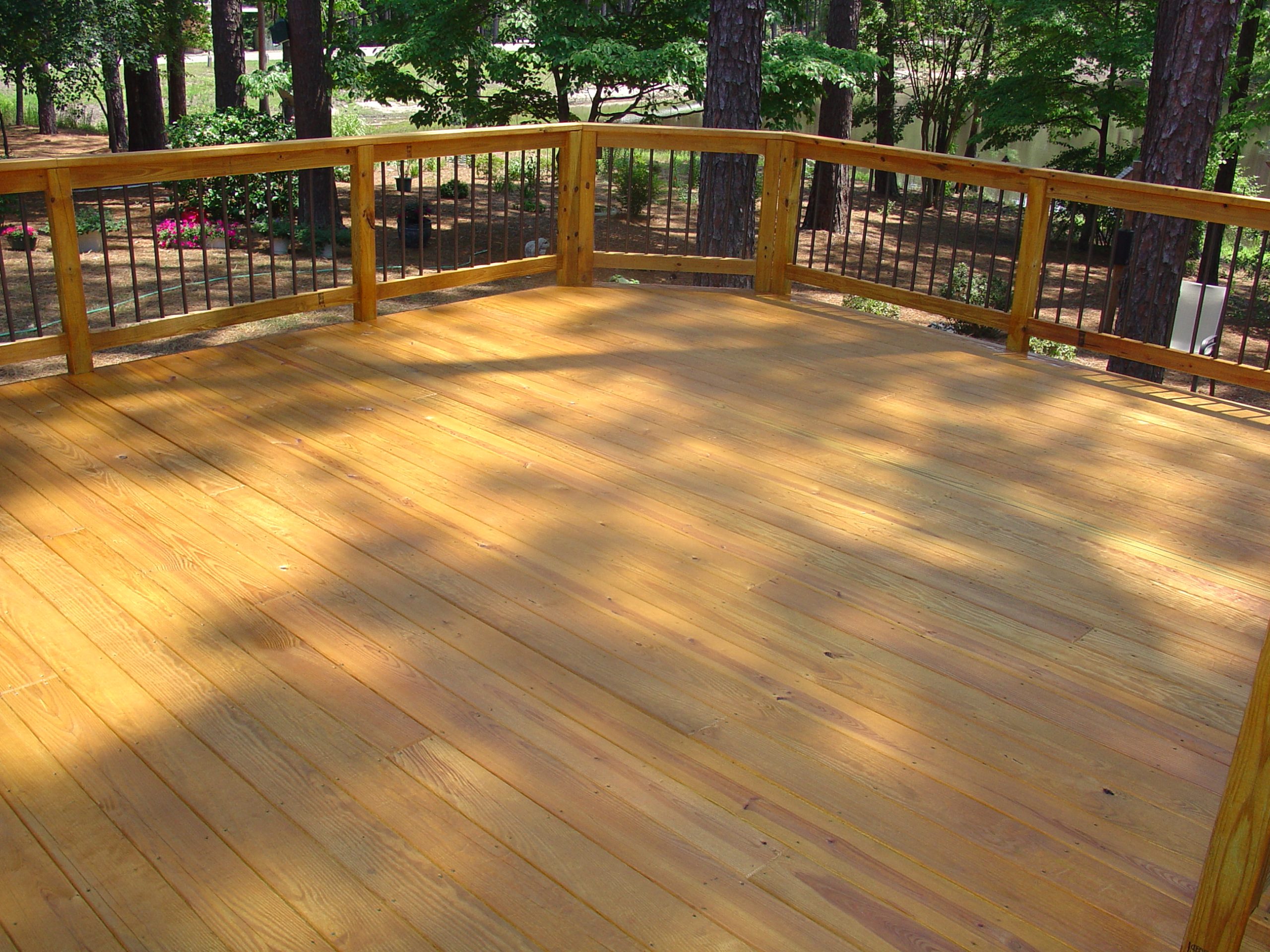
How to Choose a Deck Stain Color for Pressure Treated Wood
Choosing a deck stain color for pressure treated wood sounds simple — until you’re standing in the paint aisle staring at dozens of swatches while the weekend slips away. The green tint of fresh pressure treated lumber, the moisture trapped inside, the type of finish you pick — all of it affects how your color choice actually looks once it’s on the boards and dried in the sun.
This guide walks you through everything you need to know to make a confident color decision, from understanding why pressure treated wood behaves differently to picking a shade that looks beautiful and lets the natural character of the wood shine through for years to come.
Table of Contents
- Why Pressure Treated Wood Requires a Different Approach
- Wait Before You Stain: The Moisture Rule
- Why Oil-Based Stains with Transparent Oxide Pigments Are the Best Choice
- Understanding Stain Opacity: What to Look For
- How to Choose the Right Deck Stain Color
- Popular Deck Stain Color Families for Pressure Treated Wood
- How the Green Tint Affects Your Color Choice
- Tips for Testing Before You Commit
- How Long Will Your Color Last?
- Frequently Asked Questions
- Sources & References
Why Pressure Treated Wood Requires a Different Approach
Pressure treated wood is not the same as regular lumber, and that distinction matters when it comes to staining.
Standard lumber gets cut and dried before it reaches the lumberyard. Pressure treated wood, by contrast, has been force-infused with preservative chemicals — most commonly copper-based compounds like alkaline copper quaternary (ACQ) or copper azole — to protect it against rot, insects, and fungal decay. That treatment process leaves the wood saturated with both chemicals and moisture, which gives it that familiar greenish tint when it’s fresh.
According to the USDA Forest Products Laboratory, the copper-based preservatives used in modern residential pressure treated lumber are fixed into the wood during the treatment process, making it safe to use and readily stainable once properly dried. The key phrase there is “once properly dried.” Fresh pressure treated boards can hold a significant amount of moisture, and applying stain over wet wood is one of the most common — and costly — mistakes homeowners make.
The result: color that won’t penetrate properly, finishes that bubble or peel within a season, and a deck that looks worse than when you started.
The good news is that the right stain — applied at the right time — will protect your investment and bring out the genuine beauty of the wood. And that starts with understanding what you’re putting on those boards.
Wait Before You Stain: The Moisture Rule
You should wait for your pressure treated wood to dry sufficiently before applying any stain or sealer.
Most manufacturers recommend a waiting period ranging from a few weeks to two months after construction before staining, especially if you used lumber that was not kiln-dried after treatment (KDAT). Kiln-dried after treatment lumber is drier when it arrives and typically needs less waiting time — but it still benefits from a few weeks outside to acclimate.
How to tell if your deck is ready: Use the sprinkle test. Splash a small amount of water on the surface and watch what happens. If the water absorbs into the wood within 10 minutes, the wood is ready. If the water beads up and sits on top, give it more time. A moisture meter reading below 15% is a reliable green light.
One practical shortcut mentioned by woodworking professionals: if water doesn’t fly off the wood when you cut it with a circular saw, it’s dry enough to stain. It’s a rough test, but it’s a fast one.
Patience here pays off. A deck that’s properly dried and correctly stained the first time will look better and last significantly longer than one that was rushed.
Why Oil-Based Stains with Transparent Oxide Pigments Are the Best Choice
The single most important stain decision you’ll make has nothing to do with color — it’s the chemistry of what you put on the wood.
For pressure treated pine, a high-quality oil-based stain that uses Transparent Oxide Pigments is the gold standard. Here’s why that matters, and what it means for the way your deck looks and performs.
What Are Transparent Oxide Pigments?
Transparent Oxide Pigments are a class of finely milled iron oxide colorants that are engineered to let light pass through them rather than blocking it. Unlike conventional opaque pigments, which sit on top of the wood surface and obscure what’s beneath, Transparent Oxide Pigments penetrate into the wood fibers and tint from within. The result is rich, natural-looking color that allows the full grain and character of the wood to remain visible.
That visible grain is what separates a deck that looks genuinely beautiful from one that just looks painted.
Why Oil-Based Matters
Oil-based stains are a better match for pressure treated pine for several important reasons.
First, the oil carrier penetrates deeply into the wood fibers rather than forming a surface film. This bond is fundamentally more durable on a substrate that expands and contracts as dramatically as pressure treated pine does through seasonal moisture and temperature changes. A surface film — like those formed by water-based solid stains — is ultimately fighting the wood’s natural movement. A penetrating oil-based stain moves with it.
Second, oil-based formulas enhance the natural warmth and depth of the wood. The oil enriches the wood’s appearance as it cures, producing a hand-rubbed quality that water-based stains rarely match.
Third, and practically speaking, oil-based semi-transparent stains are the easiest to maintain over time. When it’s time to recoat — typically every two to three years on a deck surface — you clean, prep, and apply. There’s no stripping, no peeling, no scraping back a failed film finish. The stain simply refreshes.
The bottom line: A high-quality oil-based stain formulated with Transparent Oxide Pigments delivers real color protection, genuine UV defense, and a finished appearance that honors the natural beauty of the wood — which is exactly what pressure treated pine deserves.
Understanding Stain Opacity: What to Look For
Once you’ve committed to a high-quality oil-based stain with Transparent Oxide Pigments, opacity is the next decision — and it shapes everything about how your color choice will look on the finished deck.
Semi-transparent stains are the most popular choice for pressure treated decks, and for good reason. They provide genuine color depth while allowing the wood’s grain, knots, and natural texture to show through completely. In a quality oil-based formula, the Transparent Oxide Pigments in a semi-transparent stain deliver excellent UV protection while maintaining that natural, wood-forward appearance. Expect a lifespan of two to three years on a horizontal deck surface, with easy recoating when the time comes.
Semi-solid stains offer heavier color coverage with just a trace of grain texture still visible beneath. They’re worth considering if your pressure treated boards have noticeable color variation or minor surface imperfections you’d like to even out, while still staying well short of the opaque look of a solid stain. A quality semi-solid in an oil-based formula with Transparent Oxide Pigments still lets the wood breathe and move naturally.
Solid stains hide the grain entirely and work more like exterior paint. While they offer the widest color palette and the longest interval between recoats, they form a surface film that will eventually chip and peel — particularly on high-traffic horizontal deck boards. Once you’ve gone solid, maintenance becomes significantly more intensive. For homeowners who want to showcase the natural beauty of pressure treated pine, solid stains are generally not the right direction.
For most pressure treated pine decks, a semi-transparent oil-based stain with Transparent Oxide Pigments is the best all-around choice. It delivers the color, the grain visibility, the durability, and the ease of maintenance that make deck ownership genuinely enjoyable rather than a chore.
How to Choose the Right Deck Stain Color
The best deck stain color for pressure treated wood is one that complements your home’s existing exterior while working with — not against — the wood’s natural base tone.
Start by looking at your home from the outside. Note your siding color, trim color, any brick or stone elements, and the surrounding landscape. Your deck is a visual extension of your home, and a color that fights with your siding will always feel off, no matter how nice it looks on the swatch.
Four questions to guide your color choice:
1. What is your home’s dominant exterior color? Warm siding tones — creams, tans, yellows, warm grays — pair naturally with honey, cedar, and warm brown stain tones. Cool siding tones — blue-grays, whites, charcoals — tend to look sharper alongside driftwood, weathered gray, or deep espresso stains.
2. Do you want your deck to blend in or stand out? A deck that blends with the surrounding landscape feels natural and relaxed. A deck that reads as a design feature benefits from a slightly richer, more intentional tone. Neither is wrong — it’s a matter of how much visual presence you want the space to have.
3. How much sun does your deck get? Full-sun decks lighten noticeably over time. If your deck gets direct sun most of the day, go a shade or two darker than your first instinct. What looks perfect fresh will look faded within a year. Quality Transparent Oxide Pigments offer inherent UV stability — they are among the most lightfast pigments available — but even the best pigments can’t fully stop the sun on an unshaded southern exposure.
4. What mood do you want the space to create? Warm honeys and cedars feel welcoming and traditional. Driftwood and gray tones feel modern and laid-back. Deep espresso and mahogany tones feel polished and intentional. Think about how you use the deck and what feeling you want to come home to.
Popular Deck Stain Color Families for Pressure Treated Wood
Here is a breakdown of the most popular color families and how they tend to work on pressure treated pine with a quality oil-based Transparent Oxide Pigment stain.
Natural wood tones (cedar, honey, golden oak) — These warm mid-tones are consistently the most popular choice for pressure treated decks — and they’re popular for good reason. They work with the wood’s natural undertones rather than fighting them, and they show off exactly what a great Transparent Oxide Pigment stain is designed to do: rich, translucent color with full grain visibility. Cedar tones in particular pair well with a wide range of home styles and surrounding landscapes.
Browns and mahogany tones — Richer, deeper browns are earthy and sophisticated. They do an excellent job of evening out the natural color variation that pressure treated lumber often shows board-to-board, while still letting the grain read clearly through the finish. Dark walnut and mahogany tones are a strong choice for homeowners who want a more polished, finished look without giving up the natural character of the wood.
Gray and driftwood tones — Gray stains have grown in popularity alongside the rise of modern and transitional home styles, and they look genuinely beautiful on pressure treated pine when formulated with quality Transparent Oxide Pigments. A driftwood or weathered gray gives the wood an aged, relaxed quality that pairs exceptionally well with gray, white, or charcoal siding. These tones also hide everyday wear and dirt particularly well between cleanings.
Redwood and russet tones — Warm reddish-brown tones are a classic for decks in wooded or natural settings, and they complement green landscaping beautifully. The copper preservatives in pressure treated wood can create a subtle reddish undertone as the wood dries — russet and redwood stain tones work naturally with that base rather than against it.
Neutral taupes and warm beiges — If you’re genuinely unsure, a warm taupe or greige sits comfortably between brown and gray and pairs with nearly any home exterior. These are safe, versatile, age-well choices that photograph beautifully in outdoor living spaces and never feel trendy or dated.
How the Green Tint Affects Your Color Choice
Fresh pressure treated wood has a noticeable greenish tint from the copper-based preservatives used in modern treatment. This tint fades as the wood dries and weathers outdoors — often within a few months — but it can affect how your stain color appears if you apply it too early.
The green base tone interacts most noticeably with lighter, warmer stain colors. A honey or golden oak tone applied over freshly treated lumber might appear slightly off when first applied, then change as the underlying tint fades.
A few practical strategies:
Go darker. Deeper tones — espresso, dark walnut, deep mahogany — carry enough pigment concentration to neutralize the underlying green cast more effectively than lighter shades.
Wait it out. Letting the wood weather for two to three months before staining allows much of the green tint to dissipate naturally, giving you a more neutral base that shows your chosen color as intended.
Test a board first. Before committing your entire deck to a color, apply your chosen stain to a single inconspicuous board, let it dry completely (24 to 48 hours), and evaluate it in natural light at different times of day. This one step prevents the most common and expensive staining regrets.
Tips for Testing Before You Commit
Testing is the most underused step in the deck staining process — and the single step that prevents the most regret.
Apply your top two or three color choices to separate boards or inconspicuous sections of the deck. Let each sample dry completely, ideally for 24 to 48 hours, before judging it. Wet stain is always darker and richer than fully dried stain — what you see immediately after application is not what you’ll live with.
Evaluate your test patches in morning light, afternoon light, and under overcast skies. Colors behave very differently depending on the light, and your deck will be seen in all of those conditions.
One observation that consistently surprises homeowners: sunlight and weathering almost always shift the finished result lighter over time. If you’re torn between two shades, the darker one is almost always the safer long-term choice.
How Long Will Your Color Last?
Setting realistic expectations is part of choosing the right stain. No finish lasts forever on a horizontal deck surface that faces sun, rain, snow, and foot traffic — and pressure treated pine is a high-movement wood that expands and contracts significantly with seasonal moisture and temperature changes.
A quality oil-based semi-transparent stain with Transparent Oxide Pigments will generally last two to three years on a deck surface. In particularly high-traffic areas or on south-facing full-sun decks, plan closer to two years. In shaded, lower-traffic areas with good drainage, some applications extend well past three years.
The factors that shorten stain life most significantly are consistent full sun exposure, standing water, and heavy debris accumulation. Keeping your deck clean — sweeping off leaves and debris regularly, clearing water pooling areas — will extend the life of any stain considerably.
When a quality oil-based semi-transparent stain eventually does need refreshing, the maintenance process is about as simple as deck maintenance gets: clean the surface thoroughly, allow it to dry, and reapply. No stripping, no scraping failed film, no priming. That ease of upkeep is one of the most compelling practical arguments for choosing a penetrating oil-based stain with Transparent Oxide Pigments from the start — and staying with it.
Frequently Asked Questions
Can you stain pressure treated wood right away?
It is generally not recommended to stain pressure treated wood immediately after construction. Fresh pressure treated lumber retains significant moisture from the treatment process, and stain applied over wet wood won’t penetrate properly — it will fail quickly. Most professionals recommend waiting at least a few weeks to two months, depending on the lumber. Kiln-dried after treatment (KDAT) lumber can often be stained sooner, but still benefits from a few weeks of outdoor acclimation. Use the sprinkle test: if water absorbs into the surface within 10 minutes, the wood is ready to stain.
What is the best type of stain for pressure treated pine?
A high-quality oil-based stain formulated with Transparent Oxide Pigments is the best choice for pressure treated pine. Oil-based stains penetrate deep into the wood fibers rather than forming a surface film, which makes them more durable on a substrate that moves significantly with seasonal moisture and temperature changes. Transparent Oxide Pigments deliver rich, translucent color that lets the wood’s natural grain and character show through — the result looks genuinely beautiful and is far easier to maintain than a solid or film-forming finish.
What color stain is best for pressure treated wood?
There is no single best color, but cedar, honey, and warm brown tones are consistently popular choices because they work naturally with the undertones of pressure treated pine. If your deck gets full sun, choose a shade slightly darker than your first instinct to account for fading over time. If your boards show uneven coloring, a medium-to-dark semi-solid tone will provide more consistent coverage than a lighter semi-transparent. For any color choice, testing on a sample board before committing to the full deck is strongly recommended.
Does the green tint in pressure treated wood affect stain color?
Yes, particularly with lighter and warmer stain colors applied before the wood has had time to dry and weather. The greenish tint from copper-based preservatives typically fades over the first few months outdoors. Staining over fresh treated lumber with a light honey or golden tone can produce a slightly muddy or off-tone result. Waiting until the tint has faded — or choosing a deeper, more pigment-rich shade — solves the problem. Testing on a sample board before the full application will confirm exactly how your chosen color interacts with the wood’s current tone.
Why do some deck stains peel while others don’t?
Peeling is almost always the result of a film-forming finish — most commonly a solid stain or paint — failing on a wood surface that is moving beneath it. Pressure treated pine expands and contracts significantly with moisture and temperature, and surface films can’t flex fast enough to keep up. Penetrating oil-based stains avoid this problem entirely because they bond within the wood fibers rather than forming a layer on top. A quality oil-based stain with Transparent Oxide Pigments will fade gradually and gracefully over time — it will never peel.
Sources & References
- U.S. Forest Service, Forest Products Laboratory — “Guidelines for Selection and Use of Pressure-Treated Wood,” General Technical Report FPL-GTR-275 — Forest Products Laboratory, USDA, 2019
- U.S. Forest Service, Forest Products Laboratory — “What’s in That Pressure-Treated Wood?” — Forest Products Laboratory, USDA, 2005
- U.S. Forest Service, Forest Products Laboratory — “Wood Preservation,” Chapter 15 — Wood Handbook: Wood as an Engineering Material, FPL-GTR-282
- Consumer Reports — “Best Wood Stains” — ConsumerReports.org, 2026