Semi-Transparent Deck Stain Colors: The Promise, The Pigment, and What Your Deck Actually Ends Up Looking Like
Semi-transparent deck stain sounds like the best of both worlds. You get color. You keep the grain. The wood looks natural but finished. It sounds perfect — and that’s exactly why it’s the finish most people choose before they’ve done their homework.
The reality is more complicated. Understanding why starts with understanding what semi-transparent stain is actually made of, and what those ingredients do to your deck over time.
Table of Contents
- What Is a Semi-Transparent Deck Stain?
- How Semi-Transparent Color Is Made
- The Clay Problem
- Color Range and Options
- Where Semi-Transparent Stain Makes Sense
- The Honest Tradeoff
- Frequently Asked Questions
- Sources & References
What Is a Semi-Transparent Deck Stain?
A semi-transparent deck stain sits between a solid stain and a clear finish. It carries enough pigment to add visible color to the wood while allowing some of the grain and texture to show through. It penetrates the wood surface partially — more than a solid stain, less than a true penetrating oil.
Most semi-transparent stains are water-based, though oil-based formulas still exist. The oil-based versions tend to penetrate a little deeper and last slightly longer before showing wear. Both carry the same fundamental limitation, which comes down to how the color is made.
The key thing to understand about semi-transparent stain is this: it is trying to do two things at once — add color and preserve natural appearance — and the ingredients required to do one work against the other.
How Semi-Transparent Deck Stain Color Is Made
To understand semi-transparent stain, you have to understand where the color comes from. This is not a minor technical detail. It is the whole story.
Semi-transparent stains get their color primarily from iron oxide pigments and clay-based mineral pigments. These are finely ground earth materials — ochres, siennas, umbers, and various clay compounds — suspended in the stain formula. They are the same class of pigments that have colored everything from cave paintings to pottery glazes for thousands of years.
Clay pigments are chosen for exterior stains because they are stable, UV-resistant, and relatively inexpensive. They do their job. But clay is an opaque, particulate material. When you suspend clay particles in a stain and apply it to wood, those particles settle into the grain and the surface pores of the wood. They add color — and they add opacity.
The more pigment the formula carries, the more color you get. The more color you get, the less grain you see. This is not a flaw in manufacturing. It is physics. You cannot load a formula with enough clay-based pigment to produce a rich, visible color and simultaneously keep the wood looking like open, natural grain. The two goals pull in opposite directions from the start.
The Clay Problem: What Happens After the First Season
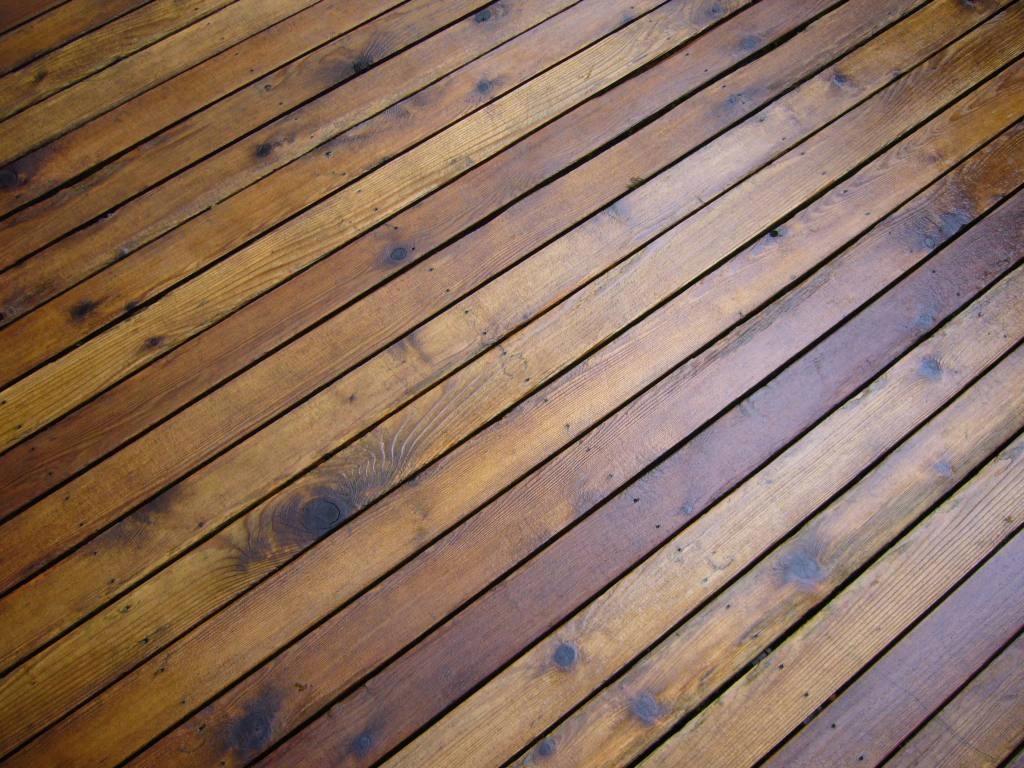
A freshly applied semi-transparent stain can look quite good. The pigment is evenly distributed, the grain is still partially visible, and the color has a warm, natural quality. This is the version you see on the can and in the marketing photos.
Then the seasons happen.
Wood expands in heat and contracts in cold. It swells when it absorbs moisture and shrinks as it dries. With every cycle, the stain film is stressed. The clay particles that carry the color don’t move with the wood the way a penetrating oil does — they sit on or near the surface, and as the wood moves beneath them, the finish begins to break down unevenly.
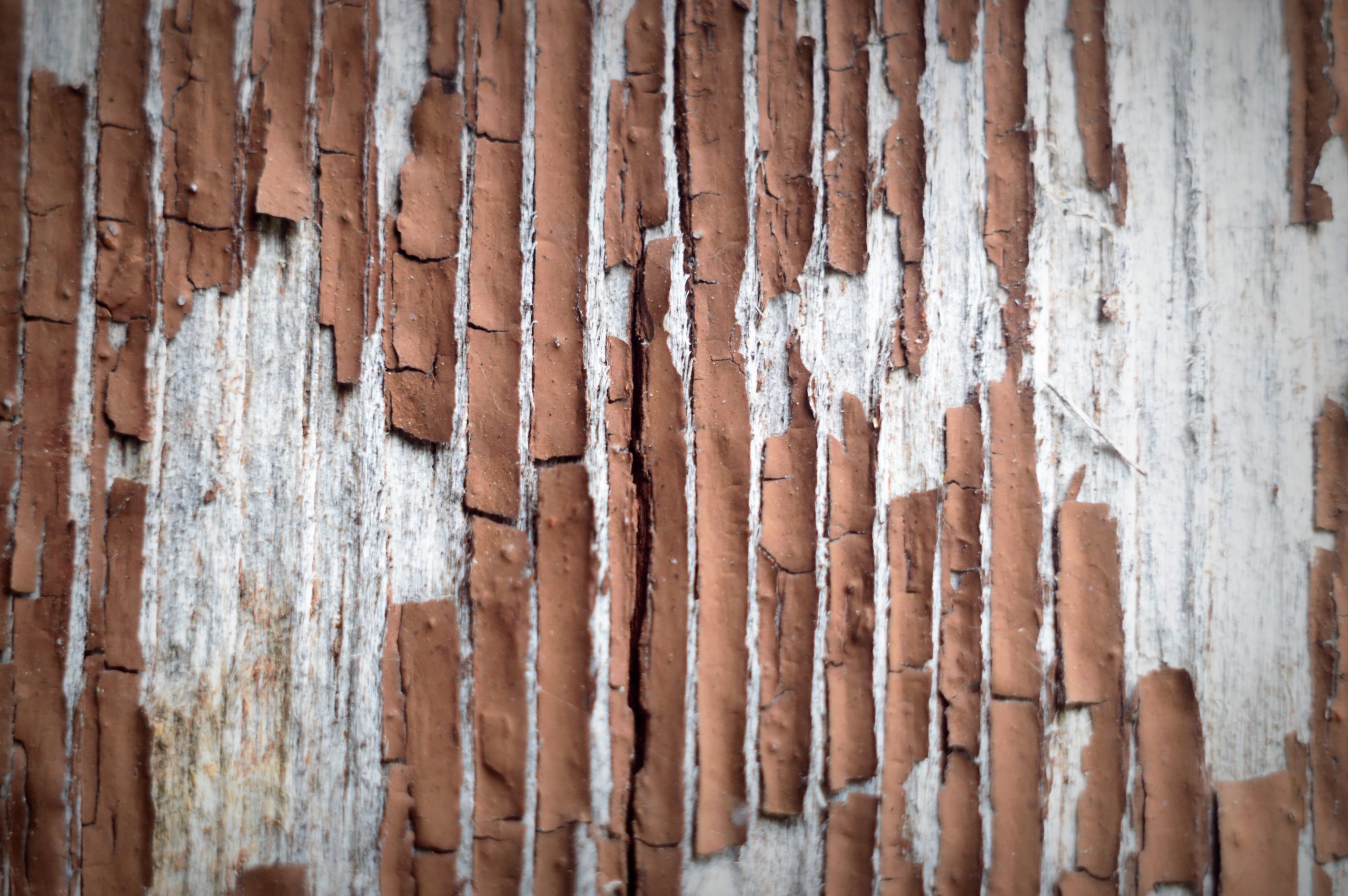
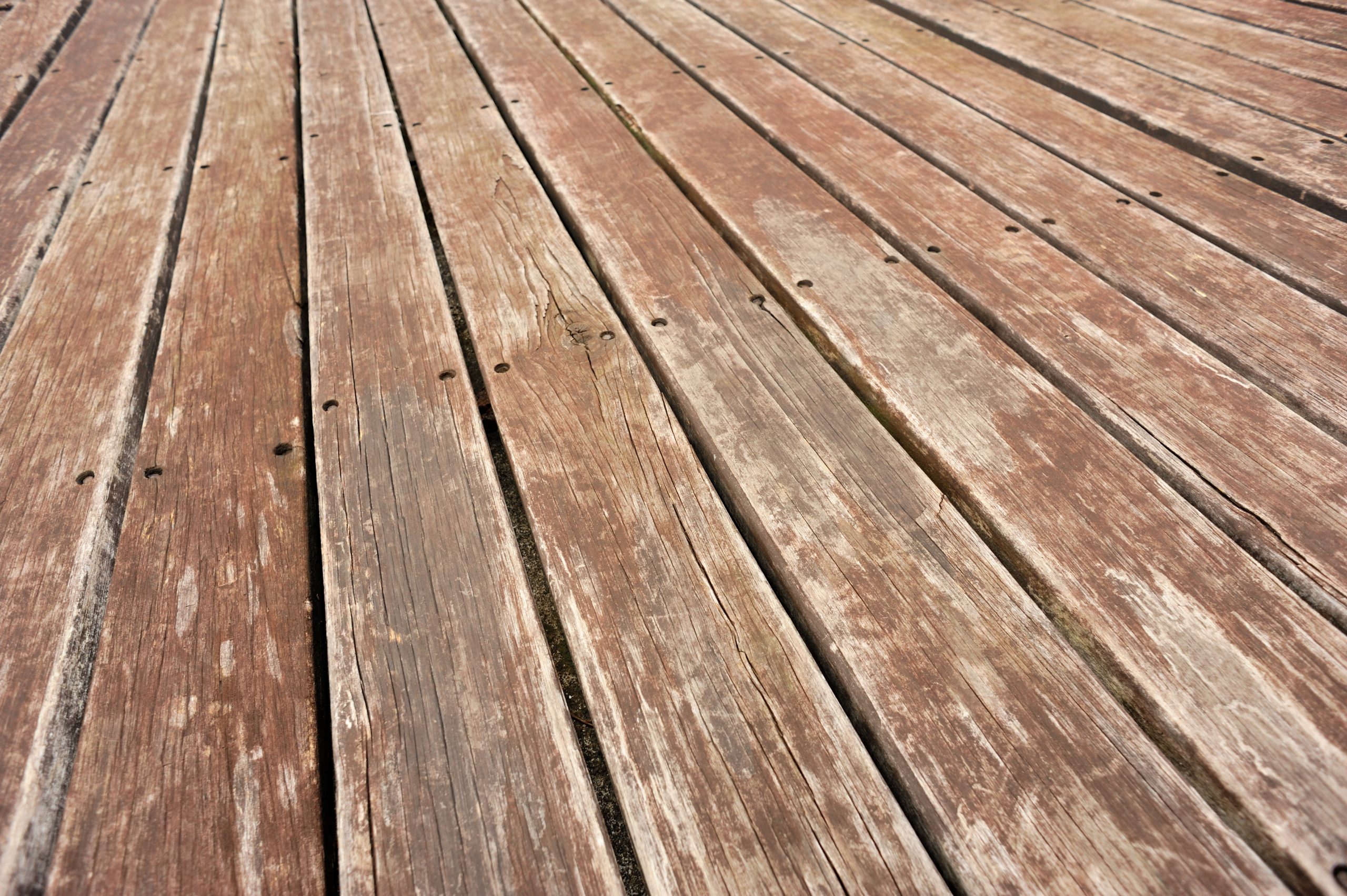
What you are left with — typically by the second or third season — is a finish that has worn inconsistently. Some areas hold more pigment. Some areas have lost it. The clay particles that once gave the finish its color now sit in a broken, uneven layer on the surface of the wood.
The result has a word. That word is clouds of mud.
When you apply a semi-transparent stain, you are suspending clay pigments in a liquid carrier and pressing them into your wood. Clay. The same material that makes riverbanks slick and garden soil heavy after rain. When the finish breaks down, that’s exactly what it looks like — clouds of mud drifting across the surface of a deck you were trying to make beautiful. You didn’t add color to your wood. You smeared mud on it and called it a color choice.
This is not an exaggeration. Pull up any deck finishing forum and look at the photos people post when their semi-transparent stain starts to fail. Cloudy. Blotchy. Muddy. The language homeowners use to describe it is almost always the same, because what they’re looking at is almost always the same thing.
Color Range and Options
Semi-transparent stains offer a more limited color palette than solid stains, and for good reason. Because the formula relies on earth-tone mineral pigments and the wood grain must remain at least partially visible, the achievable colors are constrained to the natural end of the spectrum.
You will find plenty of options in the following families:
- Cedar and redwood tones — Warm orangey-browns that complement the natural color of new softwood decking.
- Honey and golden oak — Amber tones that add warmth without dramatically changing the wood’s appearance.
- Driftwood and weathered gray — Cool, muted tones that suggest aged wood without the damage.
- Chestnut and dark walnut — Deeper earth tones for homeowners who want a richer look while retaining some grain visibility.
What you will not find is a true navy, a clean white, or a bold statement color. Those require the pigment load of a solid stain. If you’re looking for a specific color that doesn’t exist in the natural wood palette, semi-transparent is not the path to get there.
Where Semi-Transparent Stain Makes Sense
In the interest of fairness — and because this site is about helping you make the right decision rather than steering you toward any particular one — there are situations where semi-transparent stain is a reasonable choice.
Decks with Decent Wood That Needs Some Color Correction
If the wood is in reasonably good shape but has minor discoloration, weathering, or inconsistency in board color, a semi-transparent stain can even things out while still allowing the grain to read through. It won’t look as natural as a clear or toning finish, but it will look more uniform than an untreated deck with color variation.
Previously Semi-Transparent Stained Surfaces
As with solid stain, if your deck has already been finished with a semi-transparent product and the finish is still largely intact, maintaining that finish with another coat of semi-transparent stain is the most practical path. Switching finish types mid-life of a deck is possible but requires more preparation.
Homeowners Who Prioritize Low Initial Cost
Semi-transparent stains are generally less expensive per gallon than premium penetrating oil finishes. If the budget is the primary constraint and the deck is not new or exceptional wood, semi-transparent stain gets the job done for a few seasons at a lower upfront cost.
The Honest Tradeoff
Here is the fundamental problem with semi-transparent stain stated plainly: it promises two things that its own chemistry makes difficult to deliver simultaneously.
It promises color. The clay pigments deliver color — at first.
It promises visible grain. The clay pigments work against visible grain — immediately, and increasingly over time.
A homeowner who chooses semi-transparent stain because they want natural-looking wood with a hint of color is almost always better served by a penetrating timber oil with a toner. A quality penetrating oil soaks into the wood fiber rather than sitting on top of it. The color — achieved with transparent iron oxide toners rather than clay particulates — lives inside the wood rather than on it. The grain stays open and visible because nothing is sitting on the surface to cloud it.
The result is what most people were imagining when they chose semi-transparent stain in the first place. They just didn’t know a better way to get there.
The finish type you choose matters more than the color you choose. You can always find a color you love in the right finish family. What you cannot do is undo the wrong finish type without starting over.
Frequently Asked Questions About Semi-Transparent Deck Stain
How long does semi-transparent deck stain last?
Most semi-transparent deck stains last two to four years before showing significant wear. High-traffic areas and decks in climates with extreme temperature swings or heavy moisture tend to wear faster. Because the pigment sits near the surface rather than deep in the wood fiber, it is more vulnerable to foot traffic and UV degradation than a penetrating finish.
Can I apply semi-transparent stain over old semi-transparent stain?
If the old finish is clean, intact, and still bonded to the wood, a fresh coat of semi-transparent stain can be applied after thorough cleaning and light sanding. If the finish is peeling, flaking, or has worn unevenly, those areas need to be stripped or sanded back before recoating. Applying fresh stain over a failing finish produces a blotchy, uneven result.
Why does my semi-transparent stain look cloudy or blotchy?
Cloudiness and blotchiness in a semi-transparent finish almost always come from the same source: the clay-based pigments in the formula breaking down unevenly as the finish weathers. Some areas retain more pigment than others, creating an inconsistent appearance. This is not a sign of a bad application — it is the natural end-of-life behavior of a surface-applied clay pigment finish.
Is semi-transparent stain better than solid stain for showing wood grain?
Semi-transparent stain shows more grain than solid stain, yes. But it does not show grain the way a clear or penetrating oil finish does. The clay pigments that carry the color partially obscure the grain from the first application, and that obscuring effect increases as the finish ages. If showing the natural beauty of the wood grain is the goal, a penetrating timber oil with a transparent toner is a more direct path to that result.
What is the difference between semi-transparent stain and a wood toner?
A wood toner carries very little pigment — just enough to add a subtle hint of color or correct the wood’s tone without obscuring the grain at all. A semi-transparent stain carries significantly more pigment and produces a more visible, uniform color. Toners are closer in behavior to a clear finish. Semi-transparent stains are closer in behavior to a diluted solid stain.
Sources & References
- U.S. Forest Service — “Wood Handbook: Wood as an Engineering Material” — Forest Products Laboratory, 2021
- Forest Products Laboratory — “Weathering of Wood” — General Technical Report FPL-GTR-190, USDA, 2010
- Forest Products Laboratory — “Finishing of Wood” — Wood as an Engineering Material, Chapter 16, USDA, 2010
- American Coatings Association — “Exterior Wood Coatings” — Industry Technical Reference, 2019
- Graystone, R. — “Pigment Chemistry in Exterior Wood Finishes” — Journal of Coatings Technology, Vol. 74, 2002
- Related on this site — “Solid Deck Stain Colors” — DeckStainColors.com
- Related on this site — “Transparent Deck Stain Colors and Toners” — DeckStainColors.com