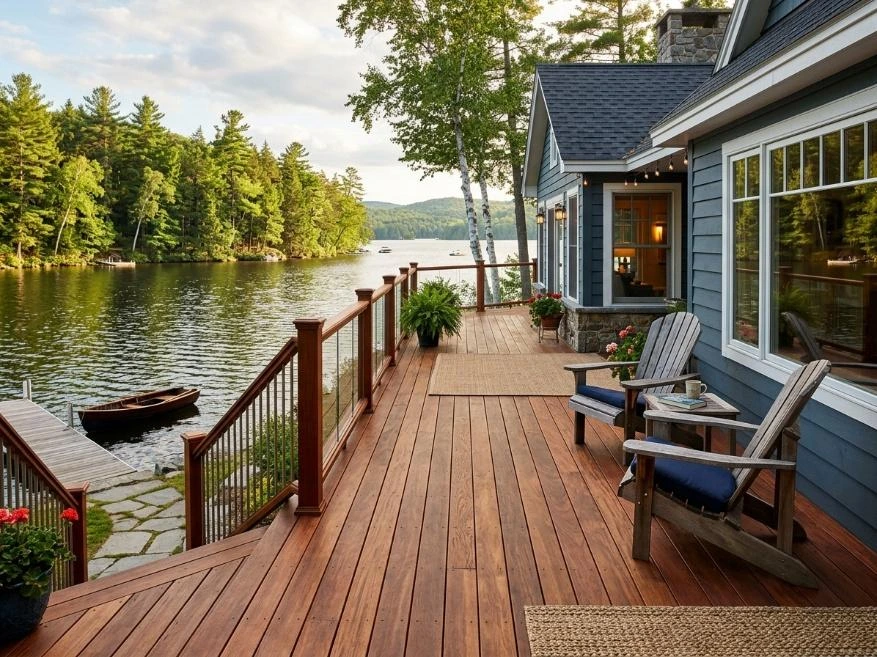
A grey house is one of the best canvases you could ask for when it comes to choosing a deck stain color. Grey is a natural neutral — it doesn’t fight with much, it plays well with both warm and cool tones, and it gives you genuine flexibility that most other siding colors don’t. The challenge isn’t that the options are limited. The challenge is knowing how to narrow them down to the one that looks intentional, not accidental.
This guide walks you through how to read your specific shade of grey, how color theory applies to the deck-and-house relationship, and which stain color families consistently deliver the best results next to grey siding — including a few combinations that will genuinely turn heads.
Table of Contents
- Why Grey Siding Is Actually a Great Starting Point
- The First Step: Identify Your Grey’s Undertone
- A Quick Note on Color Theory
- Why Oil-Based Stains with Transparent Oxide Pigments Are the Right Choice
- Best Deck Stain Colors for a Grey House
- Don’t Forget the Trim
- Heat, Sun, and Practical Considerations
- Tips for Testing Before You Commit
- Frequently Asked Questions
- Sources & References
Why Grey Siding Is Actually a Great Starting Point
Grey has become the dominant exterior siding color in American residential architecture, and for good reason. Its inherent neutrality provides a sophisticated, flexible backdrop that prevents color clashing and keeps the overall look clean and current.
For deck stain selection specifically, grey siding has one major advantage over most other colors: it doesn’t strongly favor one direction. A warm cedar tone looks intentional next to grey. So does a deep espresso brown. So does a driftwood grey that echoes the siding. You have real options — which is the opposite of the problem most homeowners think they have when they’re standing outside staring at the house, wondering where to start.
The key is understanding that not all grey is the same. Getting the undertone right is what separates a great pairing from a color combination that just feels slightly off without anyone being able to say exactly why.
The First Step: Identify Your Grey’s Undertone
The single most important factor in choosing a deck stain color for a grey house is identifying the undertone of your siding. Grey is rarely just grey — it almost always leans toward another color family, and that lean determines which deck tones will feel harmonious and which will feel like a minor mistake.
Cool greys carry blue, purple, or green undertones. They feel crisp and contemporary — think slate, pewter, or a blue-tinted light grey. Cool greys are the most common shade on modern homes.
Warm greys carry brown, tan, or beige undertones. They feel softer and more traditional — often described as “greige.” Warm greys are frequently found on craftsman, farmhouse, and transitional-style homes.
How to identify your undertone: Step outside and look at your siding in full natural daylight, ideally midday when the light is most neutral. Hold a pure white piece of paper next to the siding. If the grey looks slightly blue or purple next to the white, it’s a cool grey. If it looks warmer or slightly tan, it’s a warm grey. You can also observe it at different times of day — many greys look noticeably more blue in morning light and warmer in afternoon sun.
Once you know your undertone, color selection becomes significantly more straightforward.
A Quick Note on Color Theory
Color theory gives us a useful framework for understanding why certain pairings work and others don’t. The color wheel divides hues into warm and cool families, and one of its most reliable principles is that warm colors and cool colors naturally balance each other when placed side by side. Complementary colors — those sitting directly opposite each other on the color wheel — create the highest contrast and the most visual energy when paired together.
In practical deck terms: a cool grey house and a warm-toned deck stain are working with this principle, not against it. The warmth of a cedar or mahogany tone provides the visual energy that keeps a cool grey exterior from feeling cold or flat. Conversely, a warm grey house paired with a slightly cooler driftwood or charcoal deck tone follows the same logic from the other direction — each color moderates the other, and the overall composition feels intentional and balanced.
Why Oil-Based Stains with Transparent Oxide Pigments Are the Right Choice
Before settling on a color, it’s worth talking about what kind of stain will show that color at its absolute best — and protect the wood properly while doing it.
For any deck, but especially one that’s as visible and design-forward as one attached to a carefully considered grey exterior, a high-quality oil-based stain formulated with Transparent Oxide Pigments is the right starting point. Here’s why.
Transparent Oxide Pigments are finely milled iron oxide colorants engineered to allow light to pass through them rather than block it. Unlike conventional opaque pigments, they penetrate into the wood fibers and tint from within — delivering rich, translucent color while leaving the full grain and natural character of the wood visible. The result looks genuinely alive rather than painted over.
Oil-based stains penetrate deeply into the wood rather than forming a surface film, which makes them significantly more durable on decks that expand and contract with seasonal moisture and temperature changes. They enhance the warmth and depth of the wood as they cure, producing a hand-rubbed quality that water-based stains rarely match. And when it comes time to maintain the finish — typically every two to three years — the process is simple: clean, let it dry, and reapply. No stripping, no peeling film, no scraping.
A semi-transparent oil-based stain with Transparent Oxide Pigments lets you see the wood, feel the color, and enjoy the deck without the maintenance headaches of a solid finish. That combination is especially powerful when the deck color needs to carry real design weight next to a well-considered grey exterior.
Best Deck Stain Colors for a Grey House
Here is a breakdown of the color families that consistently work best with grey siding, organized by the type of grey they pair with most naturally.
Warm Cedar and Honey Tones
Best with: Cool grey siding (blue, purple, or green undertones)
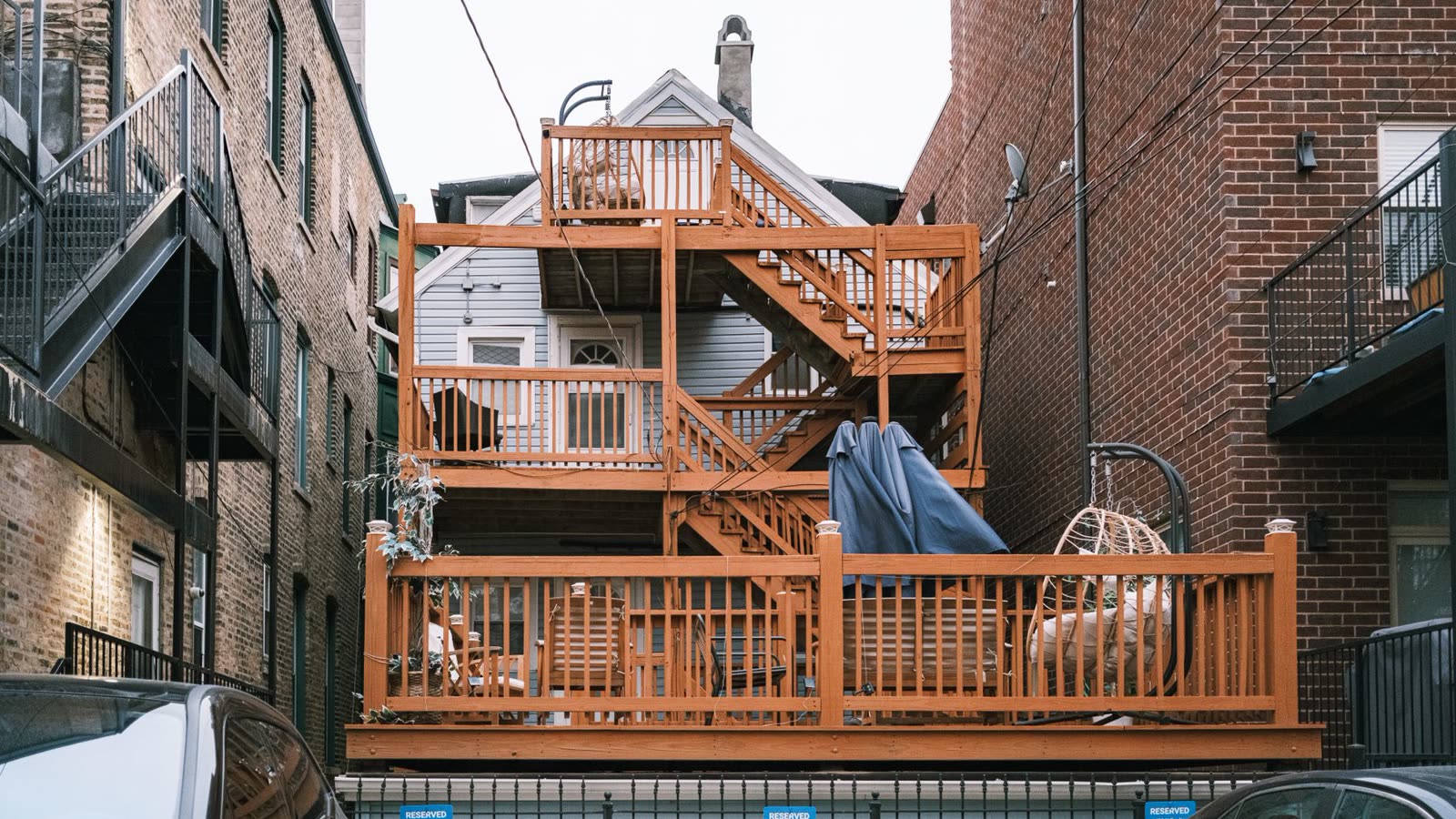
This is the most universally recommended pairing by exterior design professionals, and it earns that reputation. The reddish-orange undertones in cedar and honey stains provide exactly the warmth that a cool grey exterior needs to feel inviting rather than austere. In a semi-transparent oil-based formula with Transparent Oxide Pigments, a cedar tone glows warmly against the siding while the wood grain shows through fully — it reads as natural and rich at the same time.
This combination works particularly well on craftsman, colonial, and New England-style homes, where the warm wood tone echoes the traditional character of the architecture. It also photographs beautifully, which matters if curb appeal is a priority.
What to look for: Stains in the cedar, golden cedar, and natural cedar range. Look for warm reddish-orange undertones rather than purely yellow or tan tones, which can read as muddy next to a blue-grey.
Bronzy Reds and Warm Mahogany Tones
Best with: Cool grey siding, especially blue-grey or blue-tinted grey
This is the pairing with the most visual confidence. Warm bronzy reds sit on the opposite side of the color wheel from blue, which means they are working with the complementary color principle — and the result is genuinely striking without feeling overdone.
A great example in this category is Woodrich Brand Amaretto, a bronzy red tone that looks particularly strong next to bluish or grey siding. The warmth of the bronze pulls out the richness of the wood grain while the color itself creates a vibrant but natural-looking contrast against cool grey. In a semi-transparent oil-based formula, the grain shows through the Amaretto tone beautifully, and the overall effect is warm, sophisticated, and clearly intentional.
Mahogany and dark walnut tones in this same family offer a deeper, more formal version of the same principle — excellent for two-story homes or larger decks where you want the deck to anchor the composition rather than just accent it.
Driftwood and Weathered Grey Tones
Best with: Warm grey siding, or any grey on a modern or coastal-style home
A driftwood or weathered grey stain creates an analogous color relationship with grey siding — both colors live in the same family on the color wheel, which produces a cohesive, low-contrast look that feels relaxed and intentional. This pairing is especially popular on contemporary, coastal, and farmhouse-style homes where the goal is harmony rather than contrast.
In a semi-transparent oil-based formula with Transparent Oxide Pigments, a driftwood or weathered grey stain still lets the wood grain read clearly, which keeps the deck from looking painted or flat. The grain provides enough texture and variation that the overall look feels natural rather than monotone.
Driftwood tones also have one practical advantage: they hide everyday wear, dirt, and weathering particularly well between cleanings, which makes them a genuinely low-maintenance choice in addition to a beautiful one.
Deep Espresso and Dark Walnut Tones
Best with: Light grey siding, or any grey with white trim
For light grey homes, a deep espresso or dark walnut deck stain creates dramatic contrast that reads as sophisticated and modern. The darker the stain against the lighter siding, the more the deck becomes a deliberate design feature rather than a background element. This pairing works especially well when the home has black or dark window trim, which ties the deck color back into the overall exterior palette.
One practical note: darker stains absorb more solar heat than lighter ones. On a full-sun deck, a deep espresso tone can become noticeably warm underfoot on hot days. If your deck gets direct afternoon sun, factor that into the decision — or choose a quality stain with strong UV inhibitors to help slow the heat absorption and fading.
Warm Taupe and Greige Tones
Best with: Warm grey siding, or any grey where you’re uncertain of the undertone
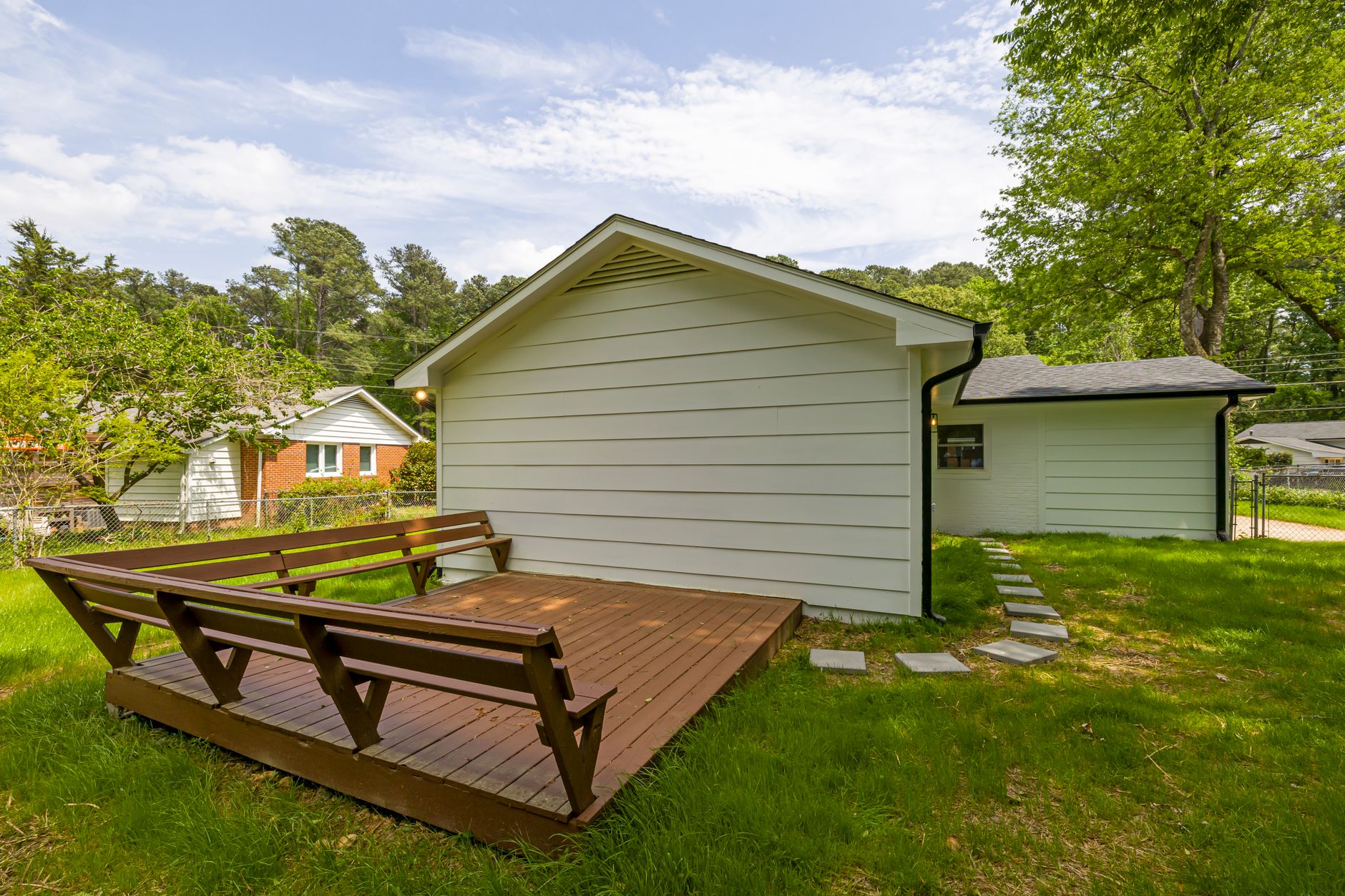
Greige — the grey-beige middle ground — is the most versatile and forgiving choice available. It pairs naturally with warm grey siding because it shares the same warm undertone family, and it adds enough visual separation from the siding to read as a distinct color choice rather than an accident.
In an oil-based semi-transparent formula with Transparent Oxide Pigments, a warm taupe or greige stain produces a genuinely beautiful result — the wood grain enriches the tone and keeps it from reading as flat or builder-basic. If you’re working with an unusual grey or a grey that shifts significantly between morning and afternoon light, greige is the safest and most consistently successful choice.
Don’t Forget the Trim
Your deck color doesn’t exist in isolation — the trim color on your home acts as a visual bridge between the siding and the deck, and it should factor into your decision.
White trim gives you the most flexibility. It provides a crisp visual break between the grey siding and whatever deck color you choose, which means almost any stain tone will work. White trim is particularly forgiving with warmer stain choices.
Black or dark trim pairs beautifully with deeper deck tones — a dark walnut or deep espresso deck looks especially sharp when the window frames and trim echo it. This combination is a strong choice for contemporary and modern-style grey homes.
Warm-toned trim (tan, cream, or wood-toned) suggests leaning toward warmer deck stain tones to keep the palette cohesive. A cedar or honey tone that picks up the warmth of the trim creates a unified look that feels professionally considered.
Heat, Sun, and Practical Considerations
Grey houses very often have south- or west-facing decks that receive significant direct sun — and sun exposure affects both color longevity and comfort underfoot.
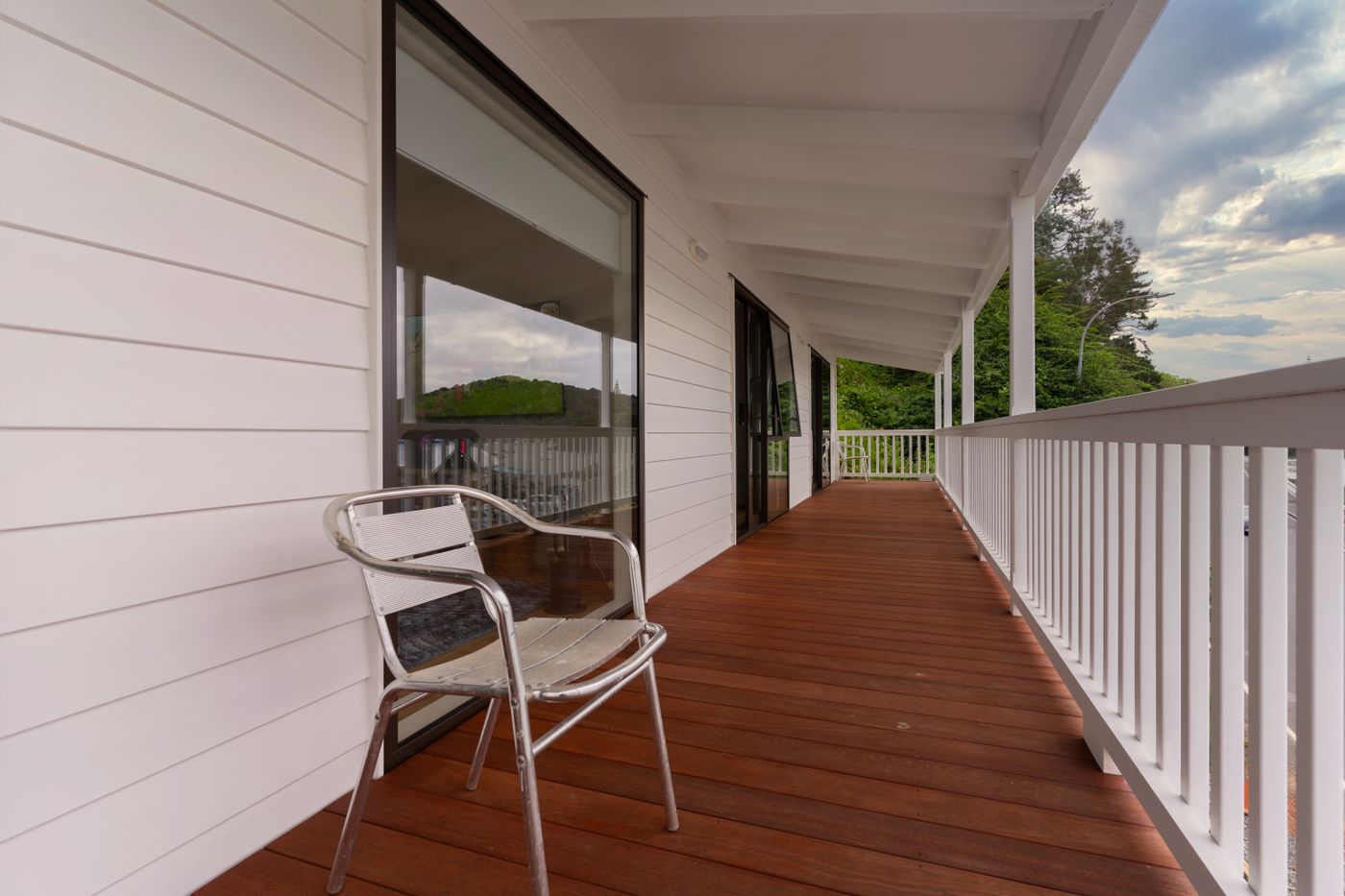
Darker deck stains — deep espresso, mahogany, dark walnut — absorb more solar radiation than lighter tones. On a full-sun deck in a hot climate, this can make the surface noticeably uncomfortable on summer afternoons. Lighter and medium tones like cedar, honey, greige, and driftwood stay meaningfully cooler underfoot and are worth considering if barefoot comfort matters to your family.
UV exposure will also gradually lighten any stain color over time, with darker tones often showing fading more visibly as contrast is lost. A quality oil-based stain formulated with Transparent Oxide Pigments offers inherent UV stability — iron oxide pigments are among the most lightfast pigments available — but even the best pigments require recoating on a regular maintenance schedule, typically every two to three years on a horizontal deck surface.
Tips for Testing Before You Commit
Testing is the step most homeowners skip and nearly all of them regret skipping.
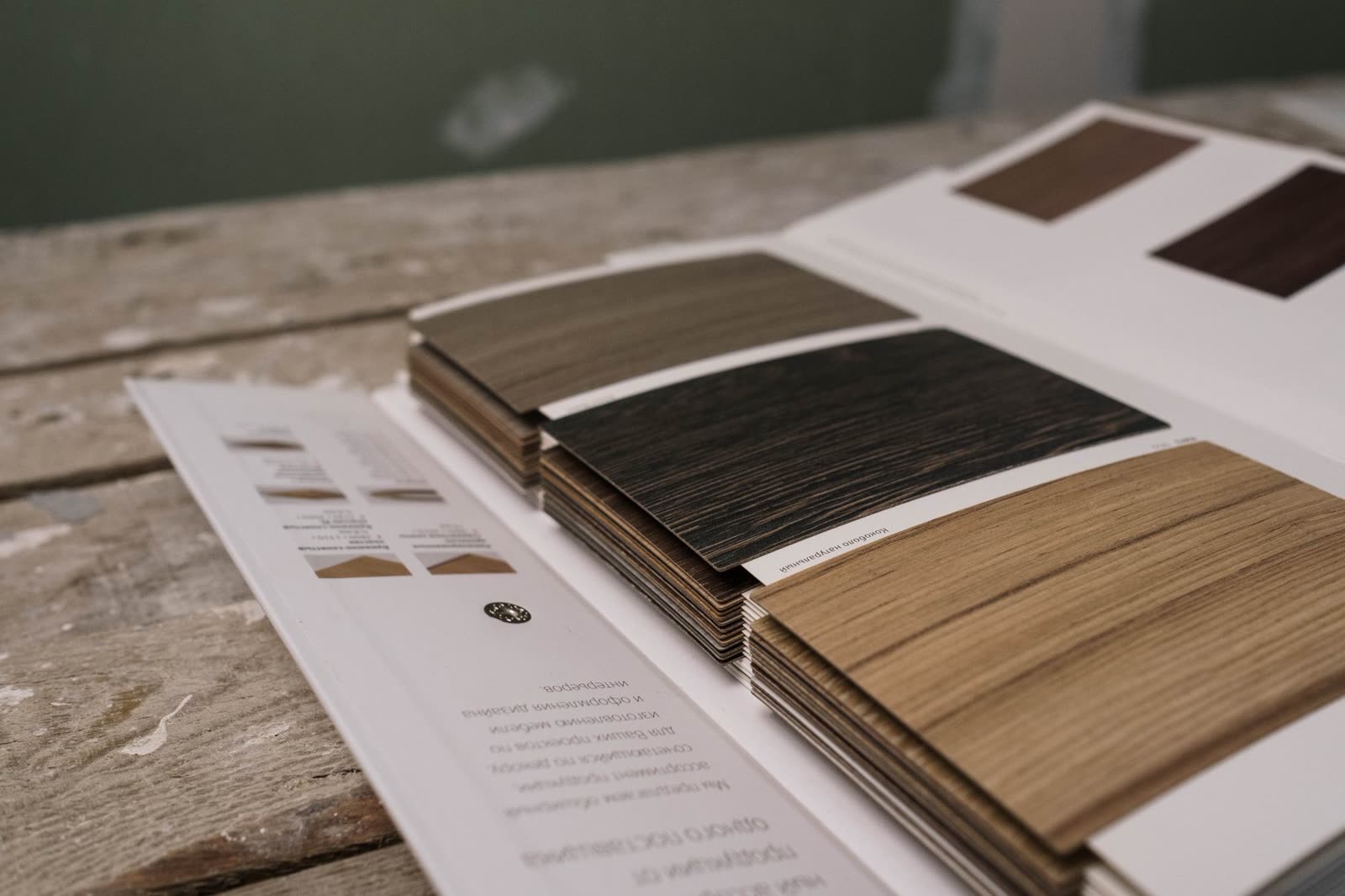
Apply your top two or three color candidates to a single inconspicuous board or a discreet section of the deck. Let each sample dry fully — 24 to 48 hours — before evaluating it. Wet stain is always richer and darker than what you’ll actually live with. Evaluating a wet sample is one of the most reliable ways to end up disappointed with the finished result.
Once the samples are dry, evaluate them at multiple times of day — morning, midday, and late afternoon. The relationship between your deck stain and grey siding will look noticeably different in flat overcast light versus warm evening sun. The color that holds up beautifully in all three conditions is the right choice.
One consistent piece of professional advice: if you’re torn between a lighter and a darker option, go with the darker one. Sun and weathering almost always shift the finished result lighter over time, and a color that starts at exactly the right depth will look faded within a year or two.
Frequently Asked Questions
What deck stain color looks best with a grey house?
The most consistently successful choice for a cool grey house — one with blue, purple, or green undertones — is a warm cedar, honey, or bronzy red tone in a semi-transparent oil-based stain. The warm undertones in these tones create a natural complementary contrast with the cool grey, keeping the exterior from feeling cold or flat. For warm grey siding, driftwood and greige tones work naturally because they share the same warm undertone family. Both pairings benefit greatly from using a quality oil-based stain with Transparent Oxide Pigments, which delivers rich, translucent color while keeping the wood grain visible.
Should my deck stain match my grey siding or contrast it?
Matching is generally not recommended. A deck color that is too close to your grey siding blurs the visual distinction between the vertical wall and the horizontal deck surface, and the overall look tends to feel flat. A modest contrast — warm against cool, or a shade significantly darker or lighter — gives the deck a distinct visual identity while still feeling cohesive with the house. You don’t need a dramatic contrast, but some separation is almost always an improvement over a near-match.
Does grey siding work with dark deck stains?
Yes, particularly light grey siding paired with a deep espresso, dark walnut, or mahogany stain. The contrast is striking and contemporary. If your home has black window trim or dark metal accents, a dark deck stain ties the whole exterior palette together beautifully. Just be aware that darker stains absorb more heat on sun-exposed surfaces, and fading may be more visible over time on deep tones without regular maintenance.
Can I use a semi-transparent stain if my pressure treated deck has uneven color?
Yes. A quality semi-transparent oil-based stain with Transparent Oxide Pigments handles moderate board-to-board color variation very well. The pigment adds enough color depth to visually even out differences without completely hiding the grain. If your boards have significant variation or noticeable weathering, a semi-solid formula in the same oil-based family will provide heavier color coverage while still letting the wood’s texture show through. In either case, a thorough cleaning and prep before staining will minimize color inconsistency.
What is Woodrich Brand Amaretto, and will it work with a grey house?
Woodrich Brand Amaretto is a bronzy red stain tone that is particularly well-suited to grey houses — especially those with blue or blue-grey siding. Its warm, reddish-bronze character creates a natural complementary contrast with cool grey tones, and in a semi-transparent formula, the wood grain shows through beautifully. It is a confident color choice that looks intentional rather than safe, and it works especially well on decks that get good natural light.
Sources & References
- Angi — “Tips for Choosing House and Deck Color Combinations” — Angi.com, 2024
- Masterpiece Roof — “What Color Deck Goes with a Grey House?” — MasterpieceRoof.com, 2026
- Ohio Exteriors — “Color Harmony: How to Choose Exterior Home Colors” — OhioExteriors.com, 2025
- U.S. Forest Service, Forest Products Laboratory — “Wood Preservation,” Chapter 15 — Wood Handbook: Wood as an Engineering Material, FPL-GTR-282
- U.S. Forest Service, Forest Products Laboratory — “Guidelines for Selection and Use of Pressure-Treated Wood,” General Technical Report FPL-GTR-275 — Forest Products Laboratory, USDA, 2019
- Related on this site — “How to Choose a Deck Stain Color for Pressure Treated Wood” — DeckStainColors.com
- Related on this site — “Transparent Deck Stain Colors” — DeckStainColors.com