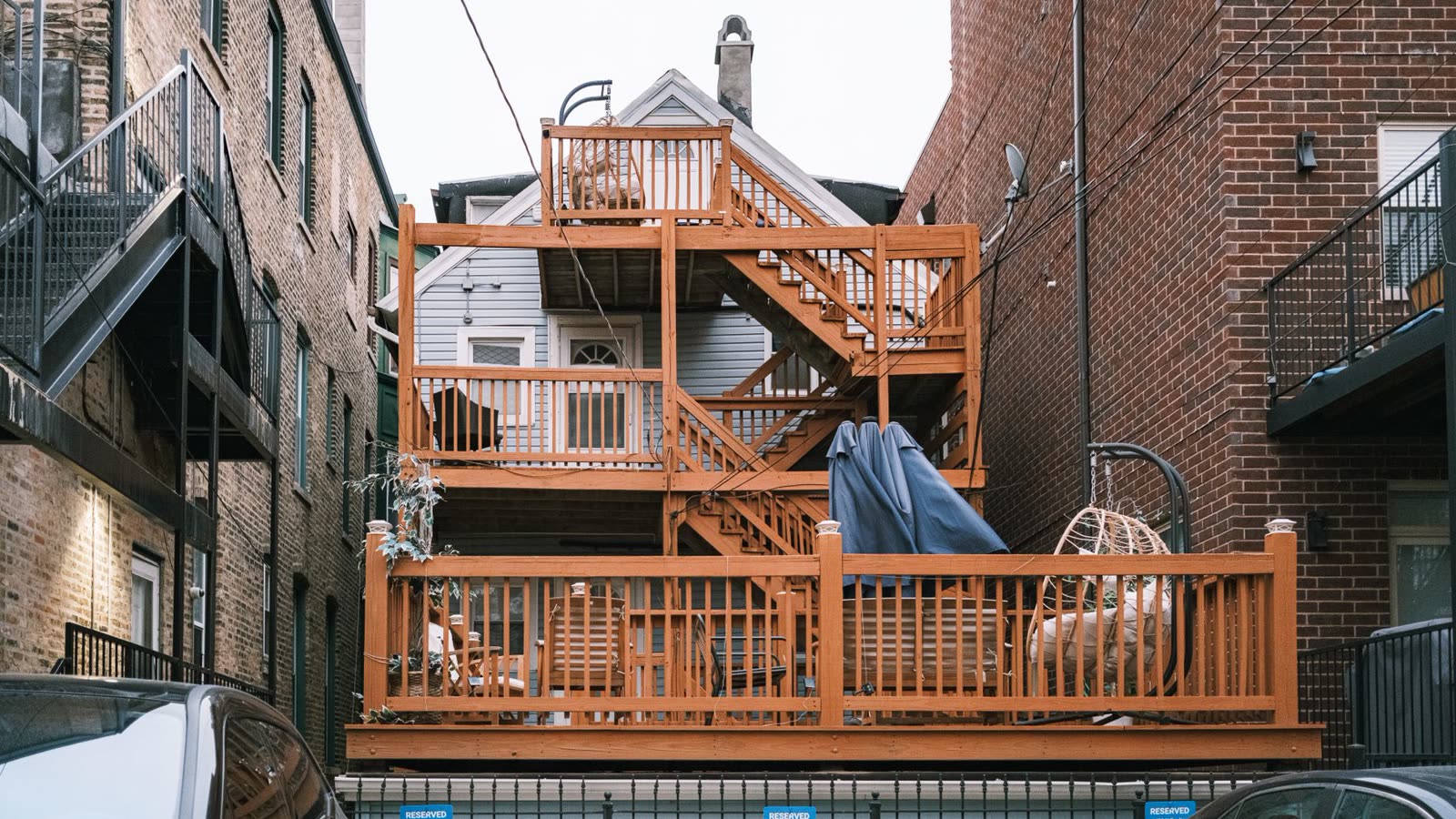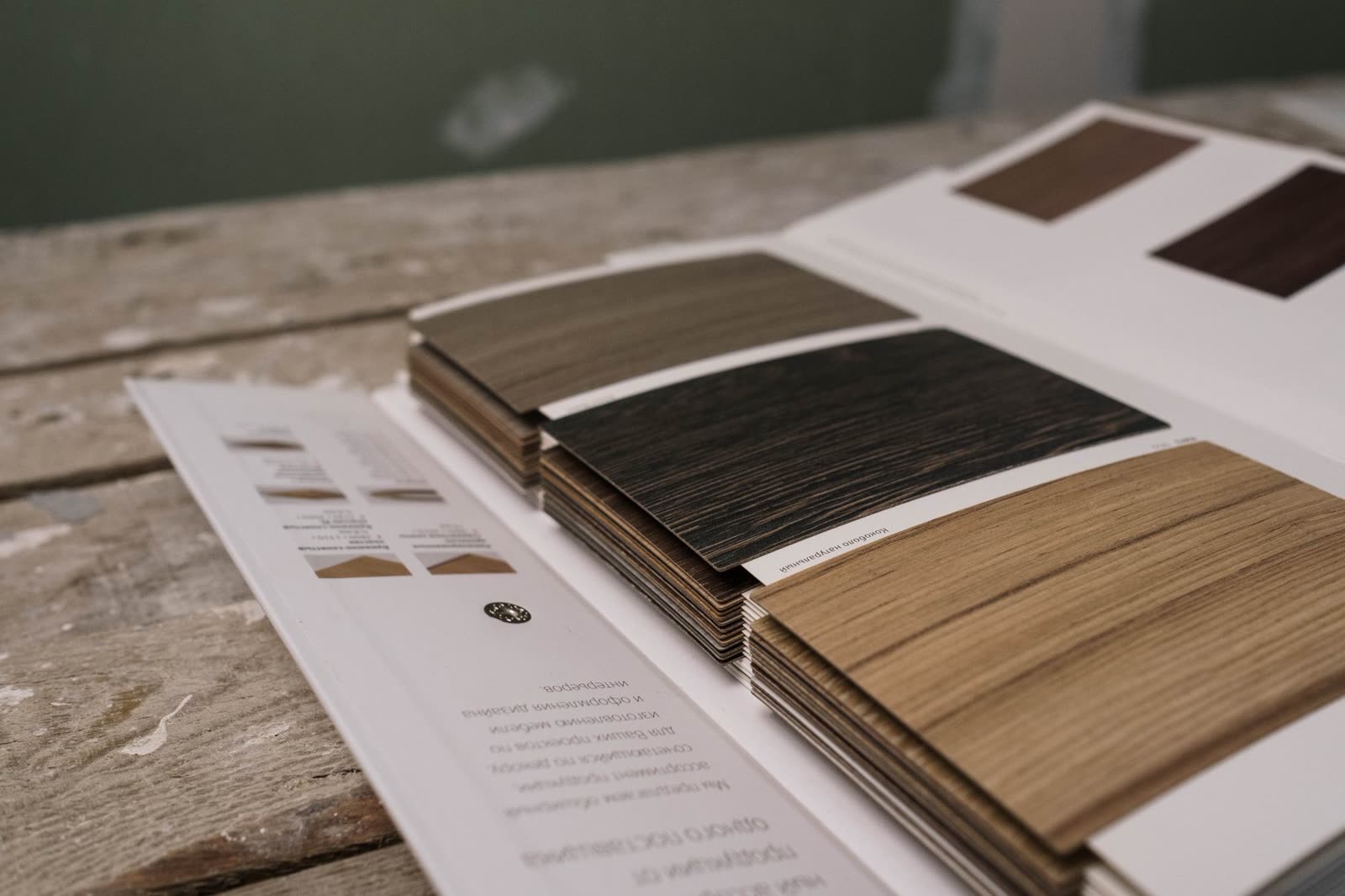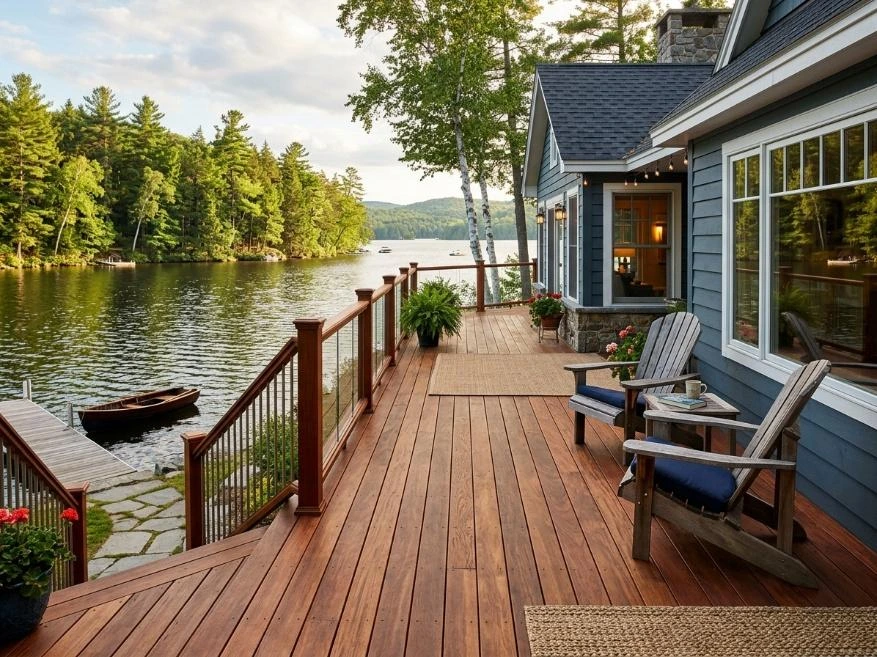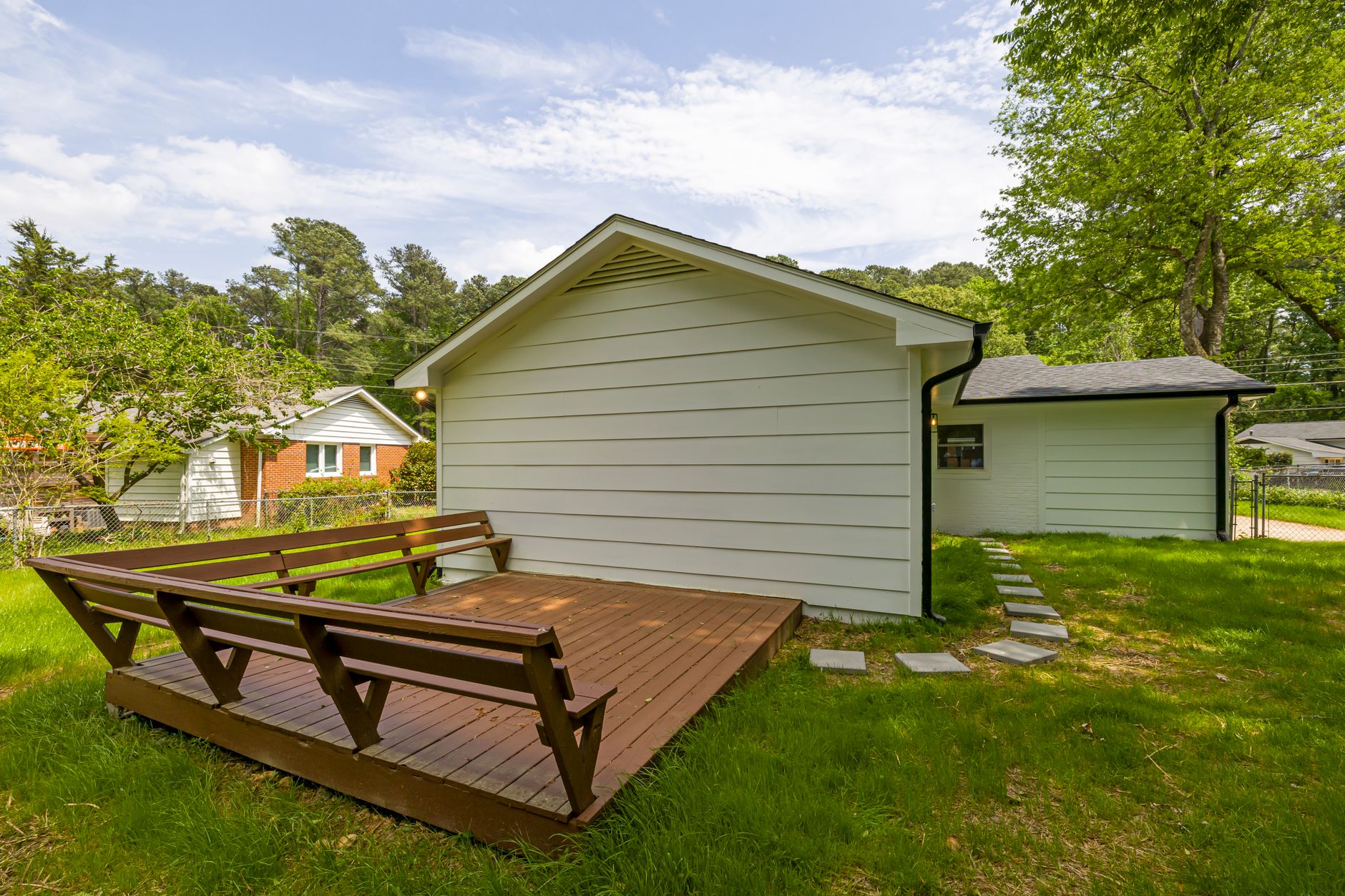
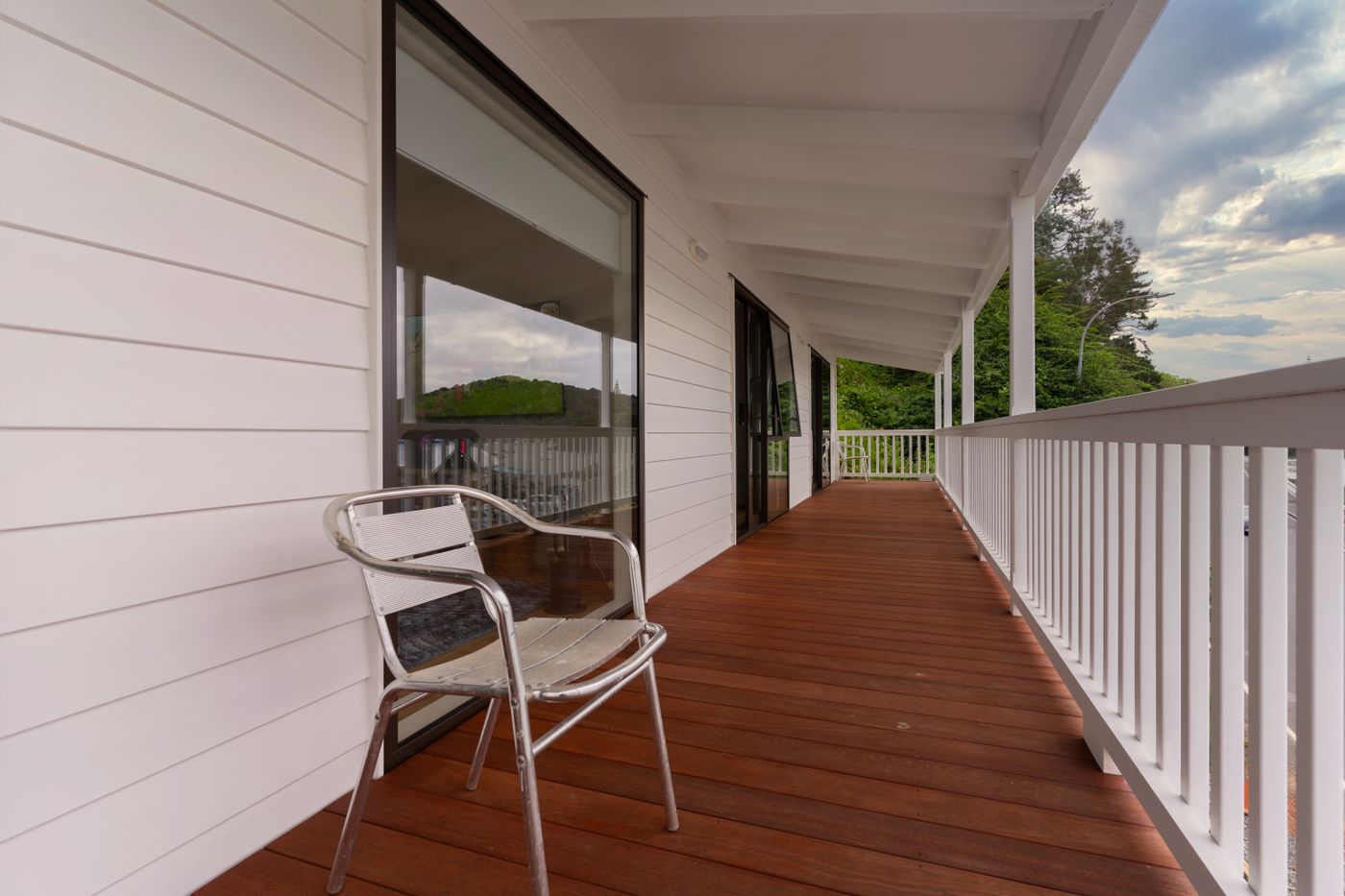
The deck color that goes with a white house depends on which white you have. Bright white siding is a cool color, and it looks sharpest next to a driftwood or weathered gray deck, or a deep espresso brown. Cream and off-white siding is warm, and it sits more naturally with honey, cedar and warm brown stains.
Whichever white you have, keep the deck clearly different from the wall. When the deck color comes out close to the house color, the line between wall and floor disappears and the whole exterior looks flat.
| Your siding | Deck colors to try | What you get |
|---|---|---|
| Bright white | Driftwood or weathered gray | Cool tones on both the house and the deck |
| Bright white | Deep espresso brown | Strong contrast, and it ties in black trim or railings |
| Bright white | Cedar or honey | A warm deck against a cool wall |
| Cream or off-white | Honey, cedar or warm brown | Warm tones on both the house and the deck |
Is Your White Bright or Cream?
Check the siding in daylight before you pick a color family. Hold a sheet of plain white paper against the wall. If the siding looks just as white as the paper, or a little blue or gray, it’s a bright white. If it looks yellow, beige or ivory next to the paper, it’s a cream, and the warm stains in the last row of the table are the natural fit.
If your house reads closer to gray than white, the grey house guide fits it better.
Gray and Driftwood Decks
Gray and driftwood suit a bright white house, but you’ll be shopping different brands for them than for warm wood tones. Woodrich, for example, makes no gray or cool color at all.
For an oil-based penetrating stain in gray, Armstrong-Clark has a Driftwood gray in its range, and TWP makes ten colors plus a clear, with grays among them. The gray deck stain colors page has more options.
Dark Brown Decks, Black Trim and Railings
A deep espresso or dark walnut deck gives a bright white house the most contrast, and it looks best when something dark on the house repeats it. Trim matters here because it sits between the wall and the deck. Black or dark window trim pairs well with a deeper deck color, and black metal railings tie in the same way.
If your trim is tan, cream or wood-toned instead, go warmer with the deck.
Dark stains absorb more of the sun’s heat than light ones, so a deep espresso deck in full sun can get noticeably warm underfoot on a hot day. Medium tones like cedar, honey and driftwood stay cooler. That’s worth weighing if your deck faces afternoon sun and people walk on it barefoot.
Warm Wood Tones on a White House
Cedar, honey and warm brown work on both kinds of white. On a cream house, they share the siding’s warmth. On a bright white house, they work by contrast, since warm and cool colors balance each other when they sit side by side.
For a warm color in a stain that still shows the grain, sample Woodrich’s Timber Oil Deep Penetrating Wood Stain first. It comes in six colors: Warm Honey Gold, Brown Sugar, Amaretto, Western Cedar, Signature Brown and a clear called Clear Advantage. Western Cedar is the cedar tone, and Amaretto is a bronzy red.
Timber Oil is a semi-transparent oil that soaks into the wood rather than forming a film on top. Its transparent iron oxide pigments block UV and still let you see the grain. With no film on the surface, there’s nothing to crack or peel, and Woodrich guarantees it won’t.
The same color will look different on your deck than it does on a chart. A cedar tone can turn yellow or green on pressure-treated pine and red on cedar. The pressure-treated wood guide and the cedar guide cover how each wood takes color.
Should Your Deck Match a White House?
For most houses, no. A white deck against white siding loses the line between wall and floor, but the bigger problem is the finish.
A semi-transparent stain can’t produce a clean white. That takes the heavy pigment of a solid stain, which behaves more like paint. Solid stain forms a film on top of the wood and hides the grain. Once that film starts to peel, it has to be stripped to bare wood before you can recoat. It also rules out a penetrating stain until it’s completely removed. A USDA Forest Service report (GTR-106) says opaque stains should not be used on decks at all.
If you still want a white or painted look, Woodrich makes no solid stain. Benjamin Moore Arborcoat does, and its dealers can color-match. Read solid deck stain colors for the trade-offs before you buy.
Test the Color Next to Your Siding
A chip or a photo can’t show you how a stain will look on your boards beside your house. The same stain looks different on pine, cedar and redwood, on new and weathered wood, and in sun and shade. Put your top two or three colors on a few boards, let them dry, and look at them with the siding in view. How to test deck stain colors has the full steps.
For the warm colors, Woodrich’s $15 Timber Oil Sample Color Kit has a 2 oz bottle of each of its five pigmented colors, and the $15 comes off a full order. Pairings for other house colors are under how to choose a deck stain color.