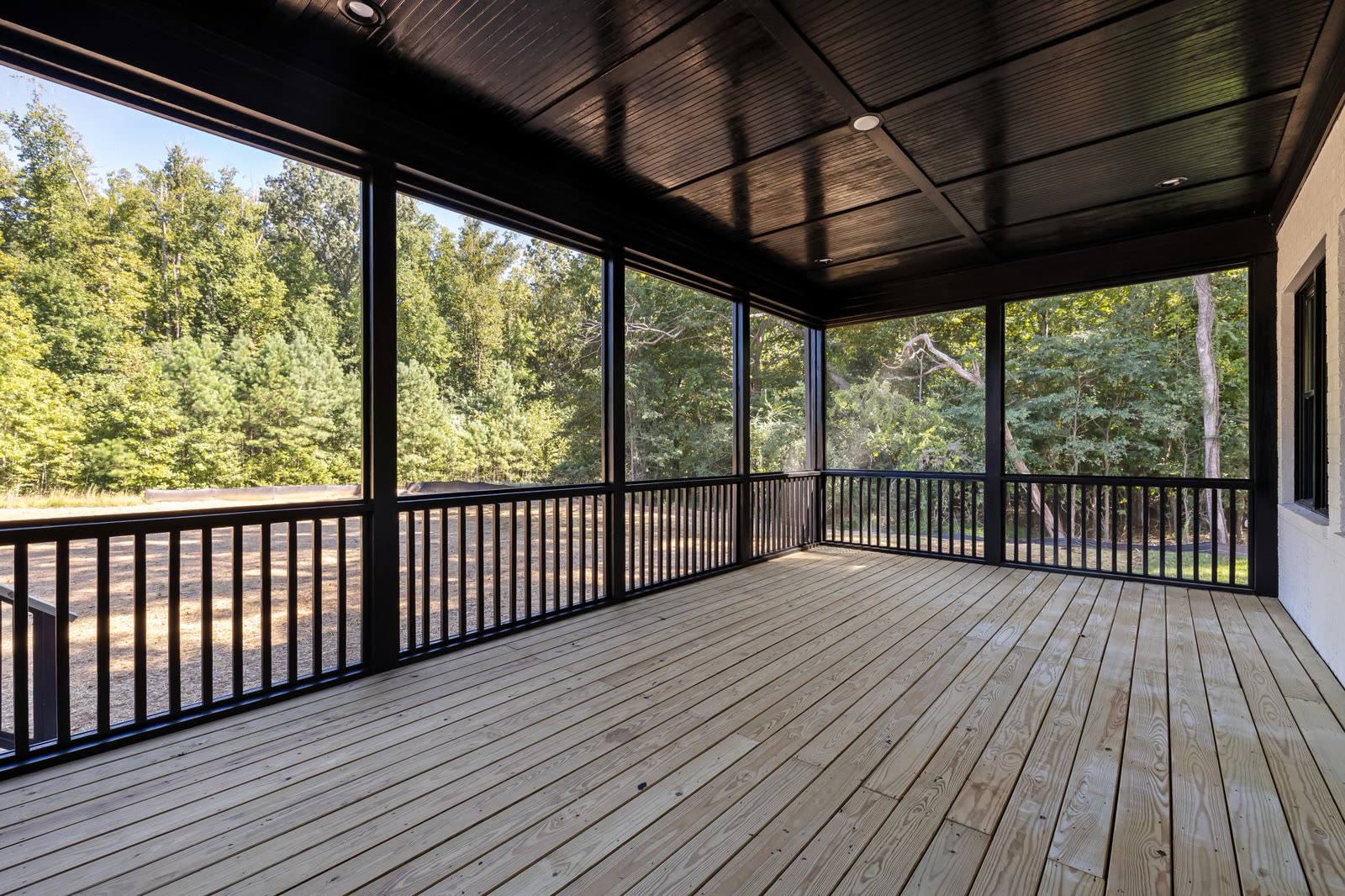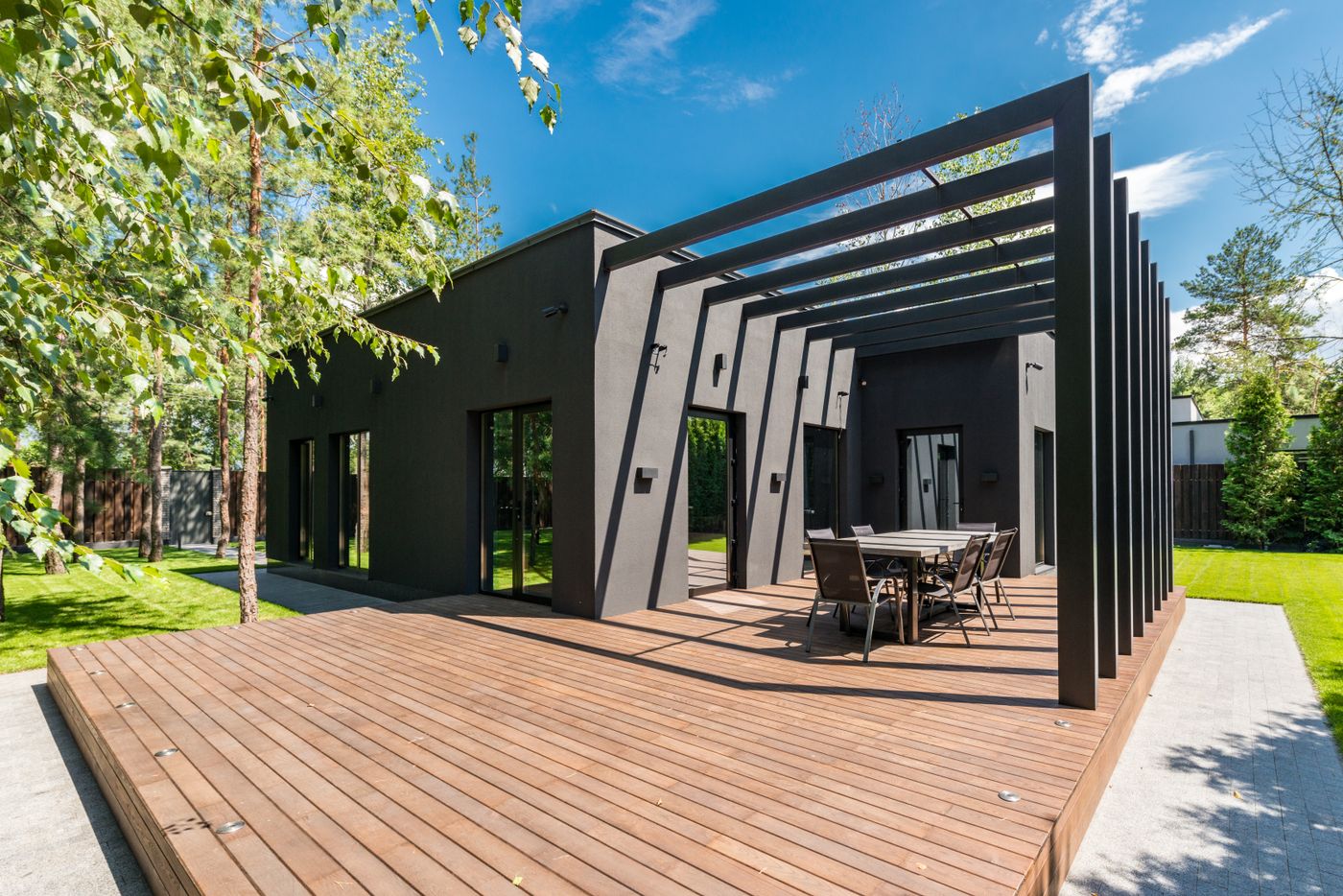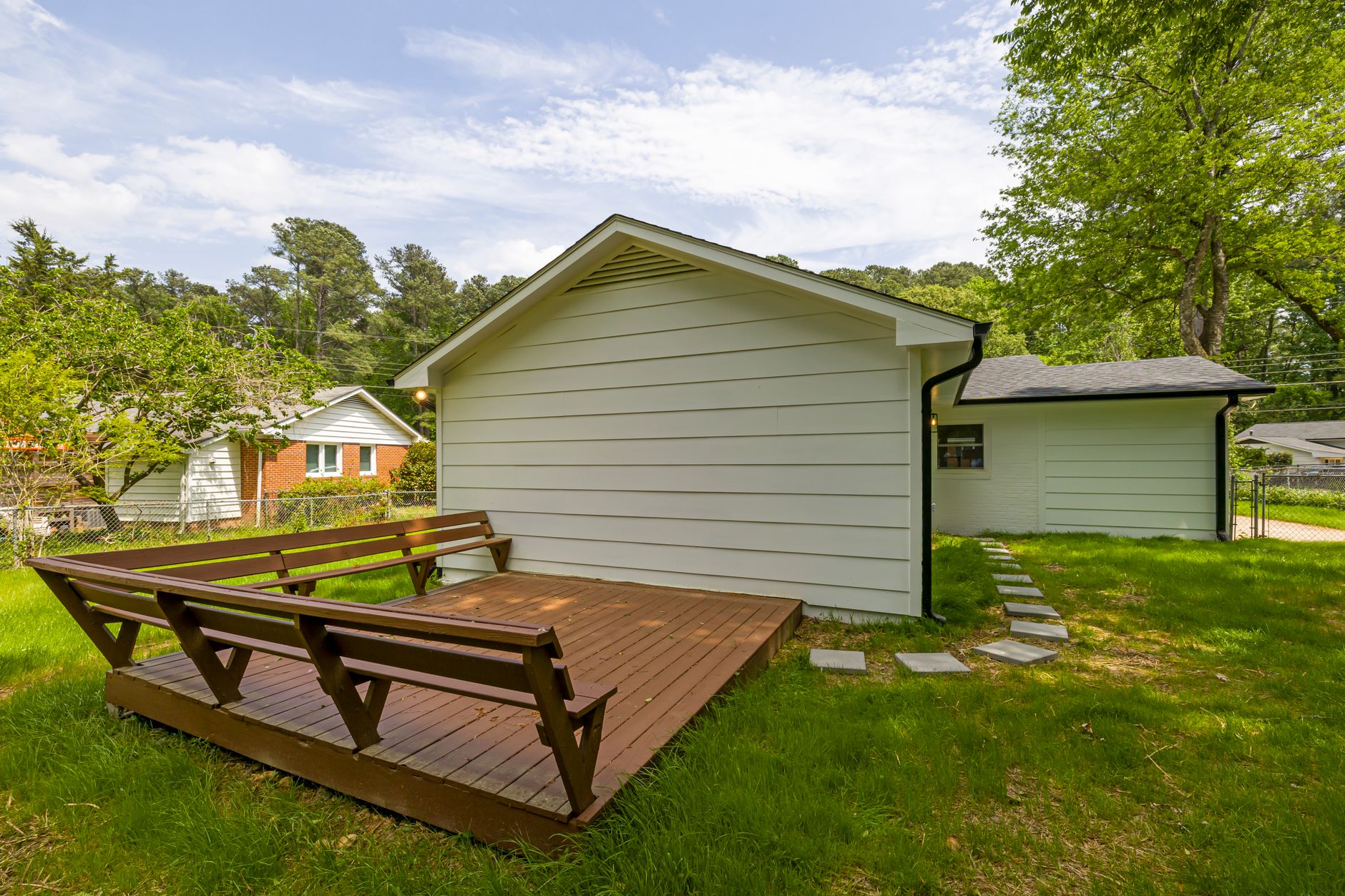
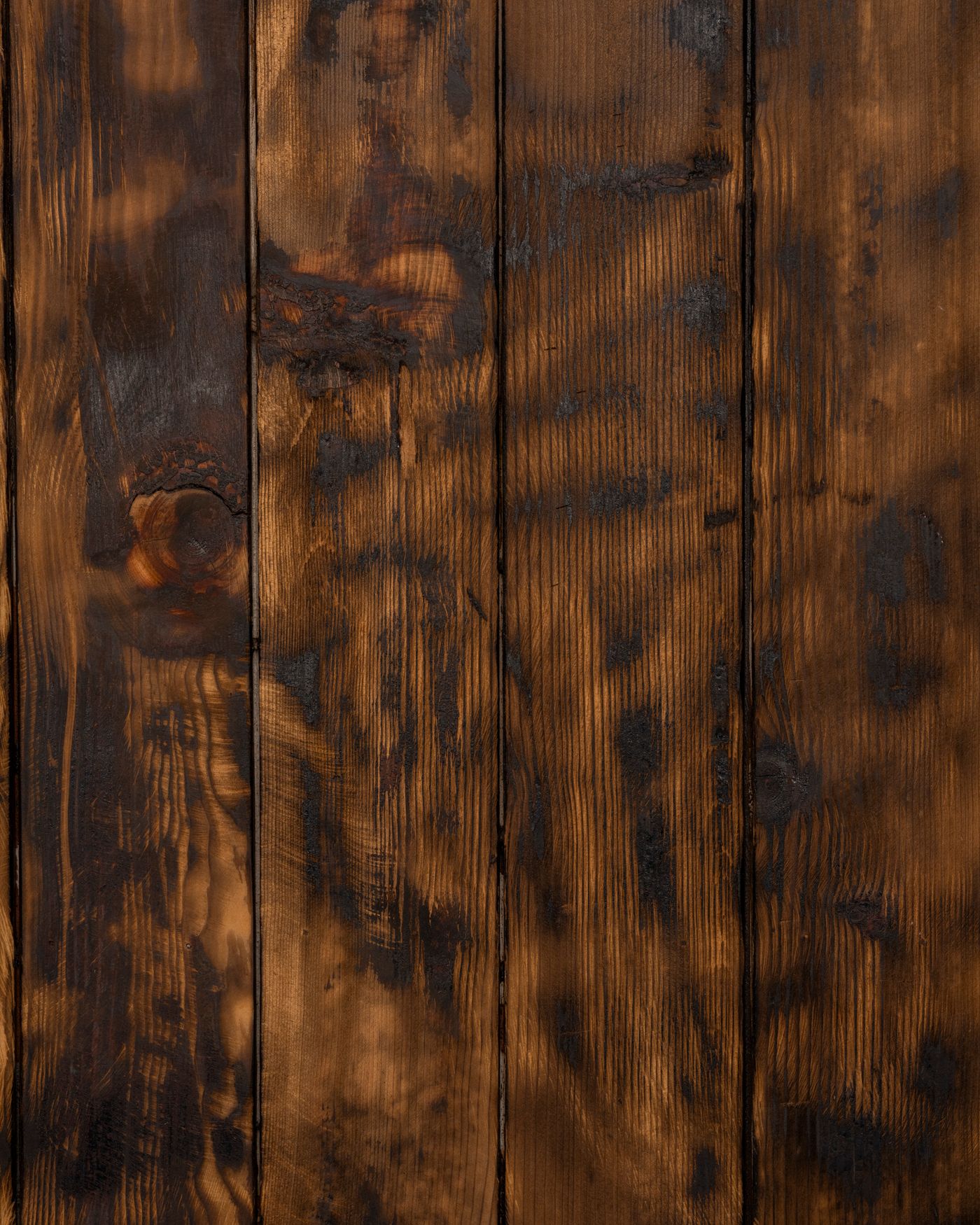
Brown deck stain comes two ways. A semi-transparent brown soaks into the wood and tints it, so the grain still shows. A solid brown forms a film over the boards and covers the grain, the way paint does. If you want the deck to keep looking like wood, start with a semi-transparent brown and pick the shade from there.
Semi-transparent brown or solid brown
A semi-transparent brown is the choice for a deck in decent shape. On pressure-treated pine, a brown also evens out the color differences from one board to the next while the grain still shows through.
A solid brown covers everything, which helps when the boards are mismatched or badly weathered, when you want a painted look, or when you have to match a color your HOA picked. The trade-off is the film. It sits on the surface and cannot flex as the wood moves, so over time it cracks and peels. Once a solid stain is on, no penetrating stain can go over it until the film is completely removed. These brands make a solid brown:
- Benjamin Moore Arborcoat Solid, in thousands of colors
- Cabot Solid
- Behr Premium Solid
- Olympic Elite Solid
- Defy Solid Color
If your deck already has a solid stain or paint that is still in good shape, stay with the same type: clean it and recoat. The solid deck stain colors and semi-transparent deck stain colors guides cover each type in more depth.
Brown colors in Woodrich Timber Oil
For a semi-transparent brown on a softwood deck (cedar, pressure-treated pine, cypress or redwood), Woodrich’s Timber Oil Deep Penetrating Wood Stain is the one to sample. It is 100% oil, with no water. It soaks into the wood fibers instead of forming a film, so there is nothing on the surface to crack or peel. It is guaranteed not to crack or peel. When it wears, you clean the deck and put on another application. No stripping.
Three of its six colors sit at the brown end of the range:
- Brown Sugar
- Amaretto, a bronzy red
- Signature Brown
The lighter two, Warm Honey Gold and Western Cedar, are covered in the natural and cedar-tone guide. The colors can be mixed if you want a tone in between. Timber Oil dries to a flat finish. A gallon costs $50 to $59 and a 5-gallon pail $233 to $269, depending on the color.
Does a dark brown stain hide the grain?
A dark brown stain does not have to hide the grain. What decides how much grain shows is the kind of pigment in the stain, not how dark the color is. Transparent iron oxide pigment, the kind in Timber Oil, blocks UV and still lets you see the wood. Clay and earth pigments are the ones that make a finish look muddy.
Does a darker brown stain last longer?
A darker brown does not last longer because it is darker. How long a stain holds up depends on the kind of pigment in it, not the depth of the color.
Which brown goes with your house
The siding and trim color narrow the choice:
- Cream or tan siding: honey, cedar and warm brown tones sit naturally beside it.
- Light gray siding: a deep, dark brown gives strong contrast, and it looks especially good if the trim is black or dark.
- Bluish or gray siding: Amaretto, the bronzy red, looks particularly good next to it.
The guide to choosing a deck stain color for a grey house goes further on gray siding, and the pressure-treated wood guide covers how color reads on pine.
Do dark brown decks get hot?
Dark brown decks do get hotter than light ones, because darker stains absorb more of the sun’s heat. A deep espresso-colored deck can get noticeably warm underfoot on a hot day. If the deck sits in full afternoon sun, a medium brown or a honey tone stays cooler.
When another brand’s brown is the better fit
Timber Oil is not the right product for every brown deck. Here is who should look elsewhere:
- You want water-based, low odor and soap-and-water cleanup. Timber Oil is oil-based and cleans up with mineral spirits. Look at Defy or Arborcoat’s waterborne line.
- You need the stain today. Woodrich sells online only, so buy from a paint store or hardware store instead.
- You want a satin sheen. Timber Oil dries flat. PPG ProLuxe Cetol has a visible satin sheen and deep amber tones. It builds a film, so it will eventually need stripping or sanding.
- It’s a small job, like a bench or a few stair treads. The smallest Woodrich size is a gallon. A quart from Cabot, Behr, Olympic or Ready Seal is enough.
- Your deck is ipe, teak or another tropical hardwood. Timber Oil is made for softwoods. Woodrich’s Hardwood Wiping Stain comes in four colors, Brown Sugar and Amaretto among them, and it is one of several options in the hardwood deck guide.
- Your deck has a thick resurfacer on it, like Behr DeckOver or Olympic Rescue It. Before you buy anything, text a photo to the Woodrich Project Support Hotline at (636) 288-8512 and ask what to do about it.
How to test a brown on your own boards
A swatch only shows how the stain looks on the sample board. The same brown looks different on pine, cedar and redwood, on new and weathered wood, and in sun and shade. Put each brown you’re considering on your own boards and let it dry for 24 to 48 hours before you judge it, because wet stain always looks darker than it will dry.
The $15 Timber Oil Sample Color Kit has a 2 oz bottle of each of the five tinted colors, and the $15 comes off your full order. The guide to testing deck stain colors has more on sampling, and the other shades are under deck stain colors by shade.