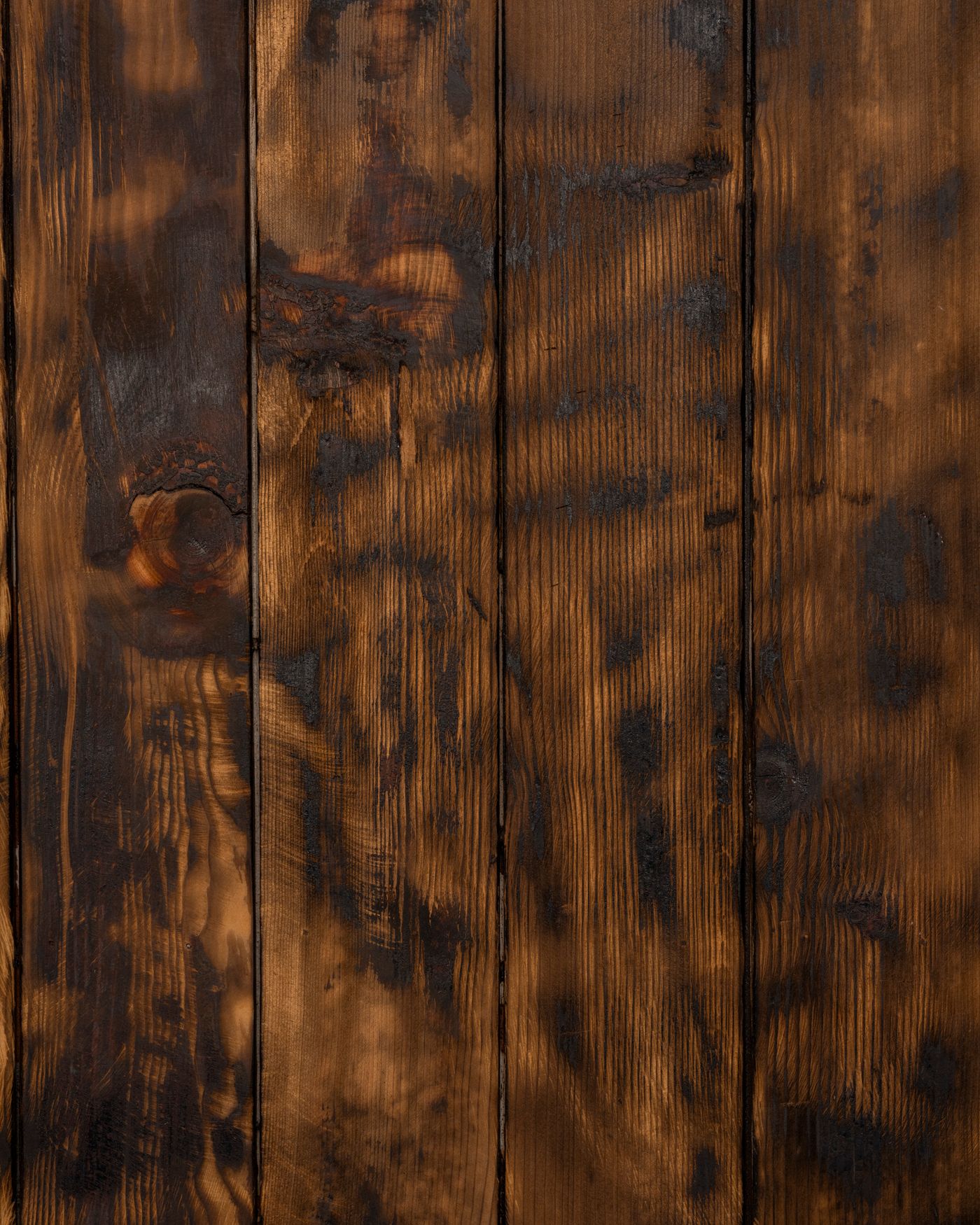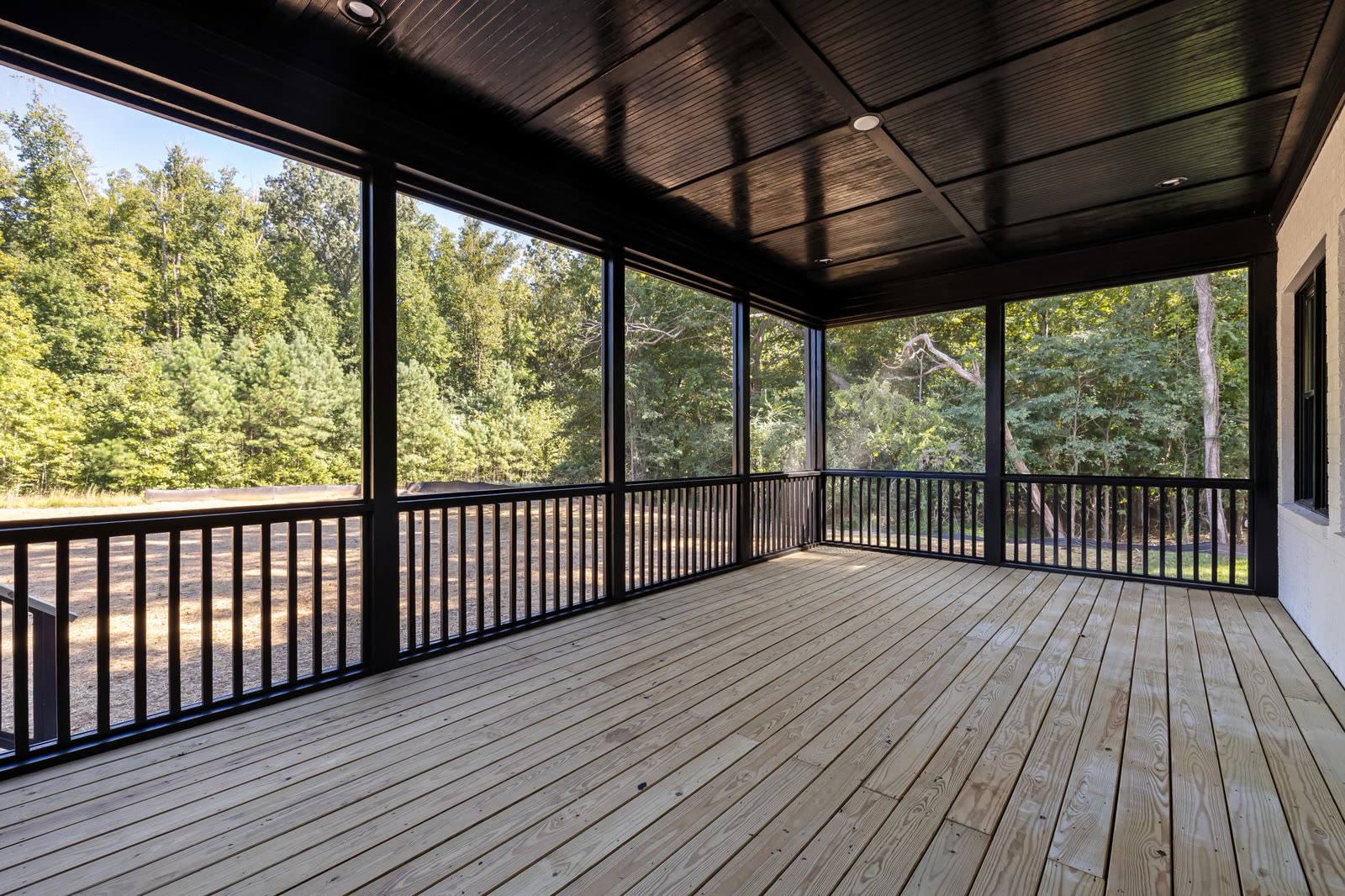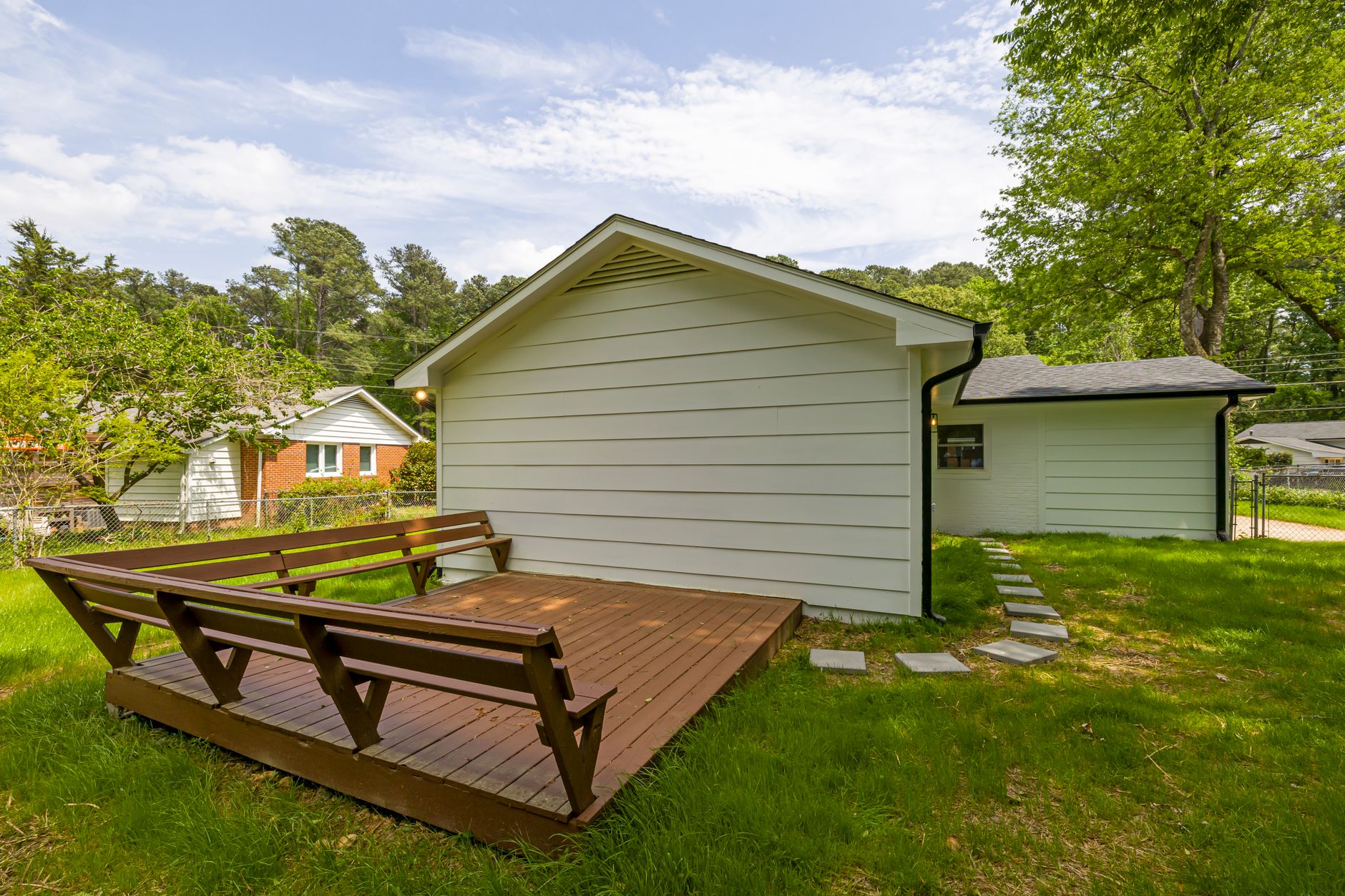
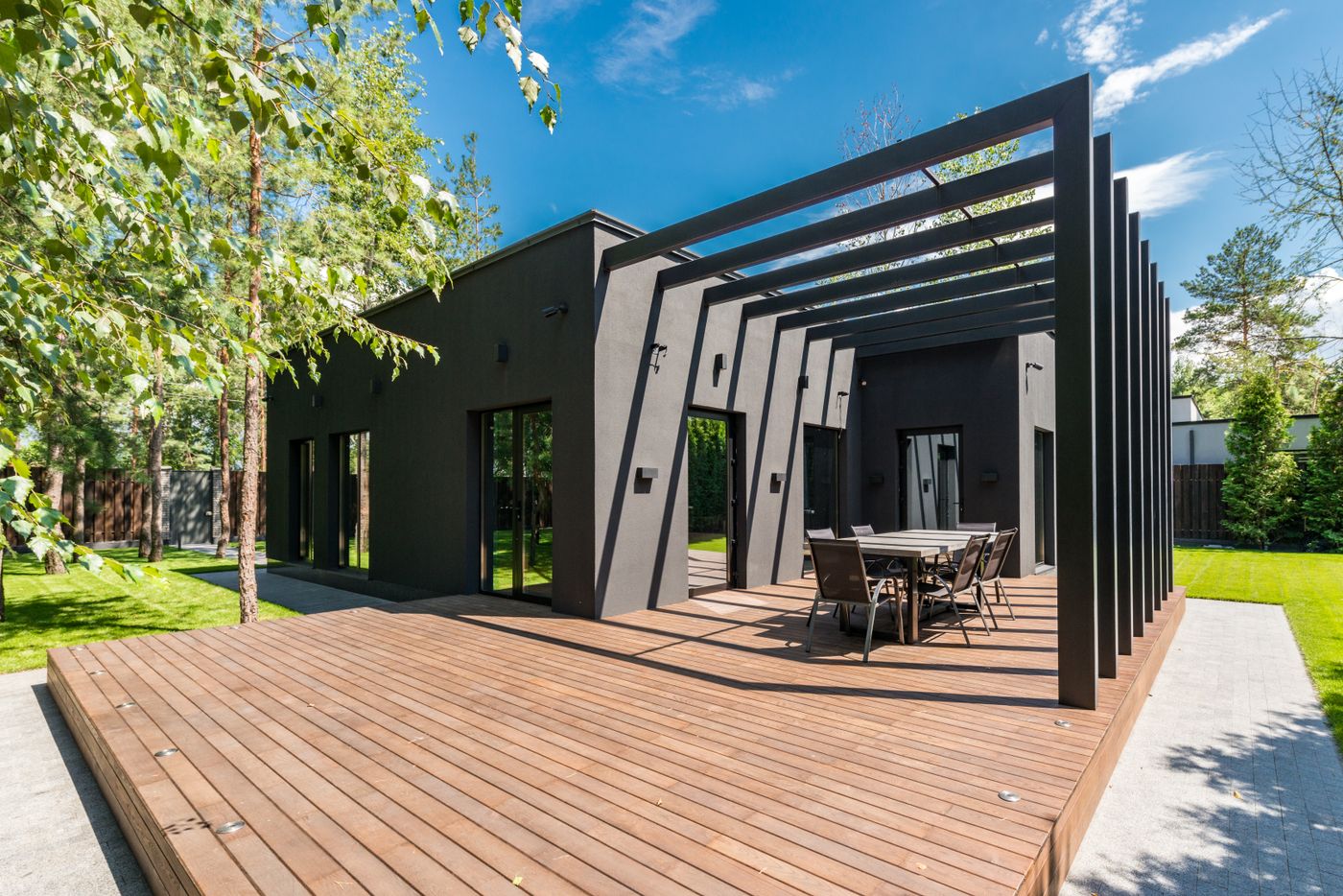
A natural deck stain keeps the deck looking like wood. It comes in two forms: a clear finish, which changes the color very little, and a lightly tinted stain in a honey or cedar tone. The tinted kind does a much better job in the sun, because a clear has no pigment to block UV.
Clear finish or a cedar tone
The two differ in pigment, and pigment is what blocks the sun’s UV.
| Clear finish | Honey or cedar tone | |
|---|---|---|
| Color change | Very little | A warm tint, with the grain still showing |
| Sun protection | Little, so the wood grays under it | The pigment blocks UV |
| Best for | Keeping the wood’s own color, if you accept that it will gray | Keeping a warm wood color for longer |
A tinted stain can protect the wood and still show the grain because of the kind of pigment it uses. Transparent iron oxide pigment blocks UV while letting you see the wood. How much grain shows depends on the type of pigment, not on how much is in the stain. The transparent and semi-transparent guides go deeper on both types.
Does a clear sealer protect a deck from the sun?
A clear sealer gives a deck very little protection from the sun. With no pigment in it, nothing blocks the UV, and the wood turns gray under the finish. New-deck owners often pick a clear to keep the fresh-wood look without knowing this. Thompson’s WaterSeal is a common example: it is mainly a water repellent and does that job, but it was not made for years of UV protection.
Natural and cedar-tone colors in Woodrich Timber Oil
For a softwood deck (cedar, pressure-treated pine, cypress or redwood) and a warm natural tone, Woodrich’s Timber Oil Deep Penetrating Wood Stain is the one to sample. It is 100% oil, with no water, and it soaks into the wood fibers instead of forming a film on top. It is guaranteed not to crack or peel. When it wears, you clean the deck and put on another application, with no stripping.
Three of its six colors fit a natural look:
- Warm Honey Gold
- Western Cedar
- Clear Advantage, for the least color change
Clear Advantage is the pick when you want the wood’s own color and you understand it gives little sun protection. It is also used for custom mixing, since the Timber Oil colors can be mixed to get a tone in between. The browns in the range are covered in the brown deck stain colors guide. Timber Oil dries to a flat finish. A gallon costs $50 to $59 and a 5-gallon pail $233 to $269, depending on the color.
How a cedar tone changes on pine and cedar
A cedar-tone stain takes on the color of the wood under it. On pressure-treated pine it can come out yellow or green, and on cedar it goes red. Fresh pressure-treated lumber also has a green tint that fades as the wood dries and weathers, and that tint shows most under lighter, warmer colors like honey and cedar. Sample on your own boards before you choose. The pressure-treated wood and cedar guides cover each wood in more detail.
Natural colors for hardwood decks
Hardwoods need a different product. Ipe and cumaru turn gray within months, and clear oils fade quickly on them. Timber Oil is made for softwoods, so look at products made for hardwood:
- Cutek, a clear or tinted penetrating oil in 18 tones that does not need stripping
- DeckWise Ipe Oil, a natural-tone oil made for ipe
- Woodrich’s Hardwood Wiping Stain, which you wipe on and wipe off, in four colors that include Warm Honey Gold and Western Cedar
The hardwood deck guide compares them.
When another product fits better
A few readers who want a natural look are better served by something other than Timber Oil:
- You want water-based and soap-and-water cleanup. Timber Oil cleans up with mineral spirits. Defy makes water-based penetrating stains.
- You want a clear for a dock or a deck in a wet climate. Seal-Once makes clear and lightly tinted water-based sealers for that use. A clear still gives little sun protection.
- You want a satin sheen and deep amber color. PPG ProLuxe Cetol has both. It builds a film, so it will eventually need stripping or sanding.
- Your deck already has a solid stain or paint on it. A penetrating stain cannot go over a film until the film is completely removed. The solid deck stain colors guide explains the options.
If you want gray rather than a warm tone, Woodrich makes no gray, and the gray deck stain colors guide lists the brands that do.
How to test a natural color on your own boards
A swatch only shows how the stain looks on the sample board. The same color looks different on pine, cedar and redwood, on new and weathered wood, and in sun and shade. Put each color on your own boards and let it dry for 24 to 48 hours, because wet stain always looks darker than it will dry.
The $15 Timber Oil Sample Color Kit has a 2 oz bottle of each of the five tinted colors, and the $15 comes off your full order. The guide to testing deck stain colors has more on sampling, and the other shades are under deck stain colors by shade.